

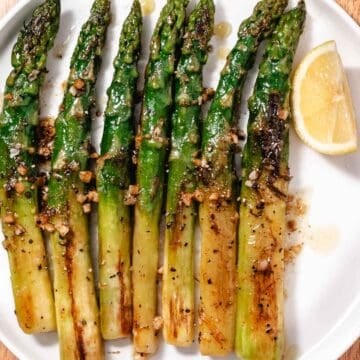
If you're wondering how to cook thick asparagus, this easy skillet recipe produces tender stalks with beautifully browned edges. A splash of water steams the stalks until tender; then they're sautéed uncovered and finished with garlicky lemon butter. It's an easy 20-minute side dish for chicken, steak, or a holiday dinner.
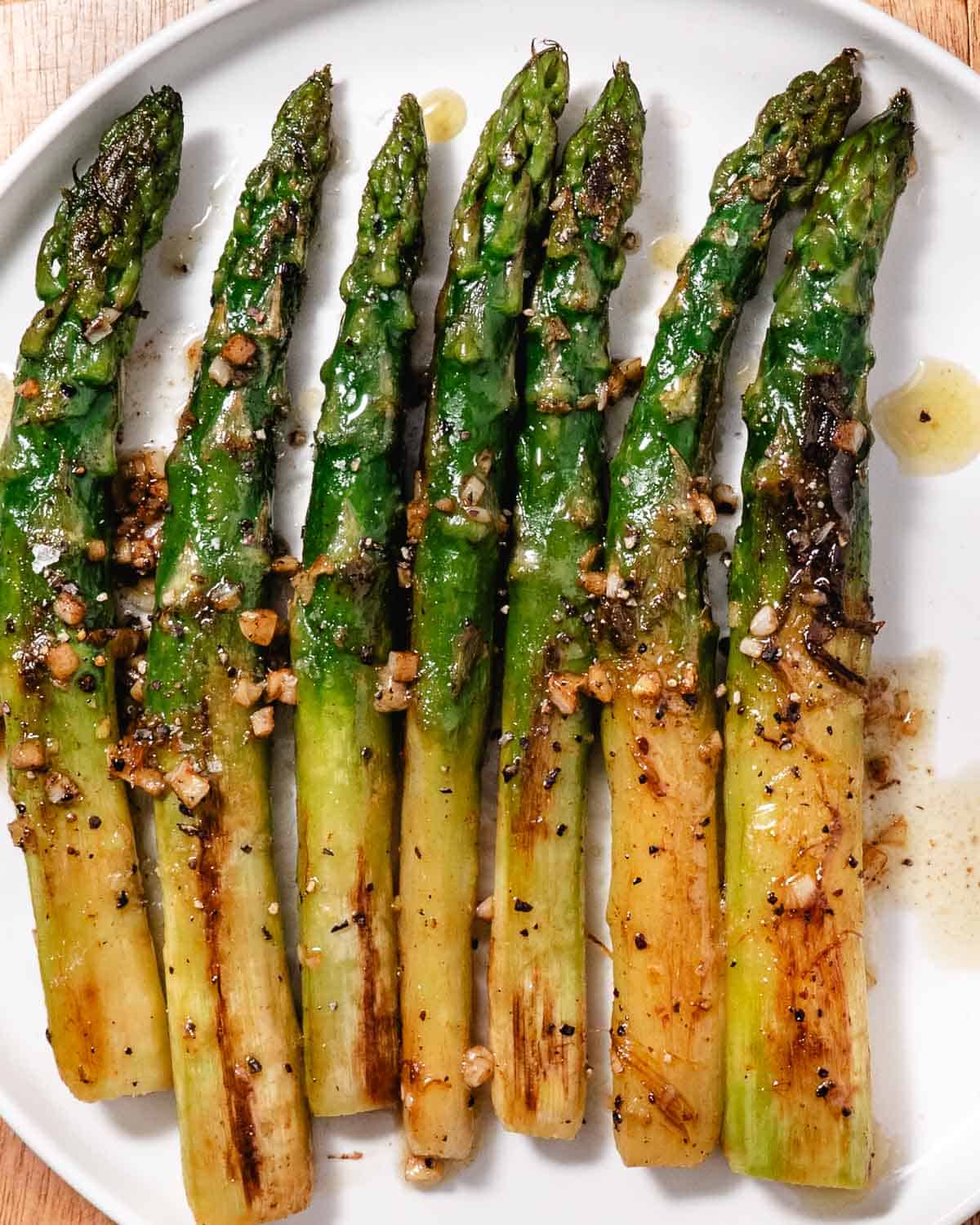
Quick Look: Thick Asparagus with Lemon Butter
- What it is: Extra-thick asparagus browned in a skillet and finished with garlic-lemon butter.
- Why Make THIS Version? Thick asparagus is meatier, juicier, and more flavorful than thin spears. It has a substantial bite and holds up beautifully to high heat.
- Key Ingredients: Thick asparagus, olive oil, butter, garlic, and fresh lemon.
- Cooking Method: Peel, steam, and sauté in one skillet.
- Dietary Info: Vegetarian and gluten-free.
- Texture: Tender and juicy inside with a substantial, meaty texture and beautifully browned edges.
- Flavor: Buttery, garlicky, and rich, with a hit of lemon.
SUMMARIZE AND SAVE THIS POST ON
Jump to:
- Quick Look: Thick Asparagus with Lemon Butter
- Why Thick Asparagus Is Better Than Thin Asparagus
- How to Choose Thick Asparagus
- Key Ingredients
- How to Trim Asparagus
- How to Sauté Thick Asparagus
- Serving Suggestions
- Storage and Reheating
- More Stovetop Vegetable Recipes
- FAQ: How To Cook Thick Asparagus
- How to Cook Thick Asparagus with Lemon Butter
Why Thick Asparagus Is Better Than Thin Asparagus
We love thick asparagus! Its substantial, meaty texture and fuller asparagus flavor set it apart from thin spears.
Thick stalks stay juicy inside, brown beautifully, and hold up well to high-heat cooking.
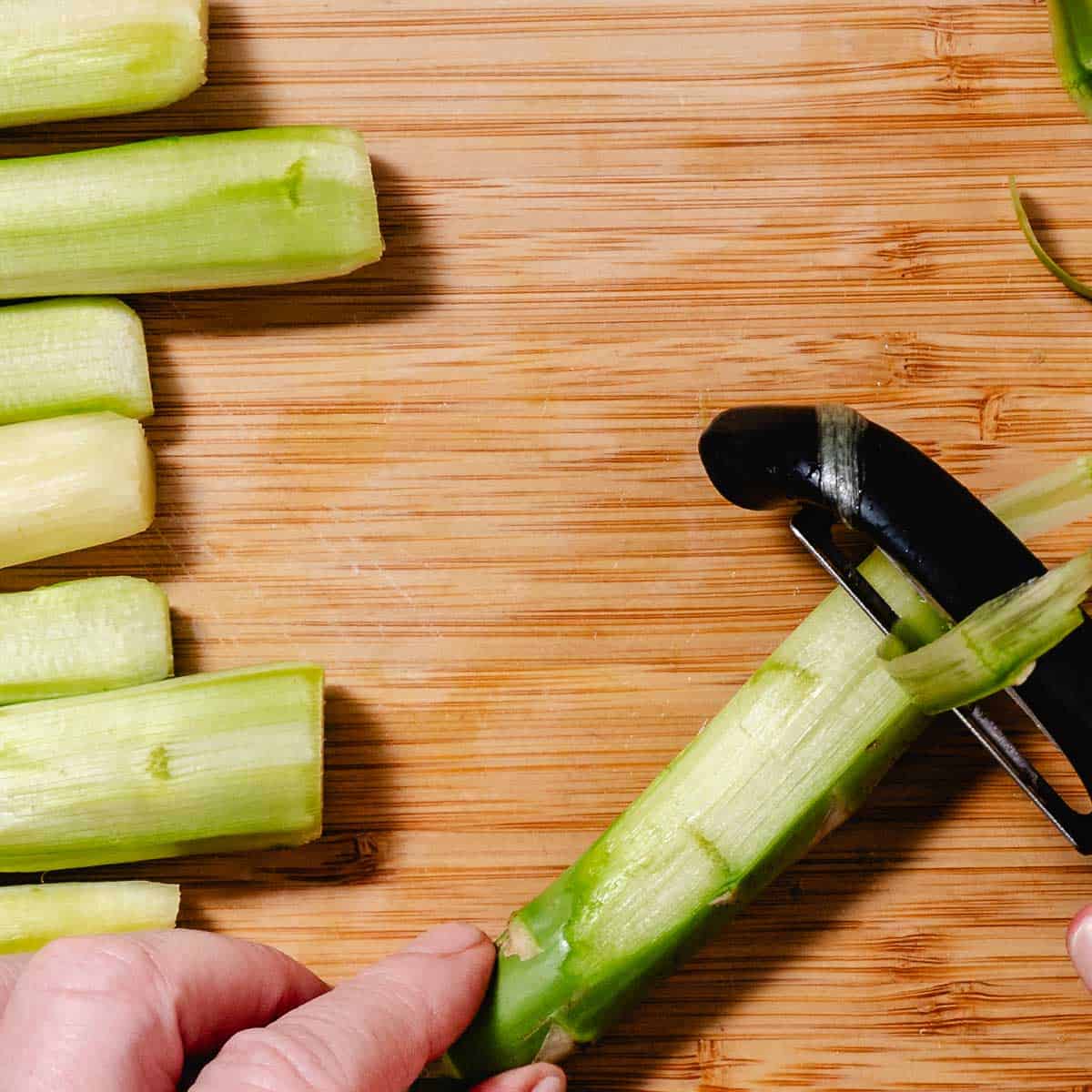
For the best results, peel each stalk from just below the tip to the trimmed end to remove the tough, stringy outer layer.
Thick asparagus is delicious when prepared several different ways. Try sheet pan roasted asparagus, crispy grilled asparagus, or easy steamed asparagus.
How to Choose Thick Asparagus
Extra-thick asparagus is commonly sold through foodservice suppliers, so it can be difficult to find in regular grocery stores. Look for it at farmers' markets, specialty produce stores, and well-stocked supermarkets.
You may also see these large spears labeled "fat asparagus" or "jumbo asparagus."
Don't let the size fool you. Thick stalks grow that way from the start and aren't overgrown thin stalks that have turned woody.
When properly prepared, they're tender, juicy, and meaty.
Choose firm, bright green, rounded stalks with compact, tightly closed tips. Avoid flattened spears and stalks with large white, woody sections near the base. Once the tips loosen or get mushy, the asparagus is past its prime.
Use asparagus soon after purchase because it toughens quickly. Refrigerate it in a sealed plastic bag with the ends wrapped in a damp paper towel.
Key Ingredients
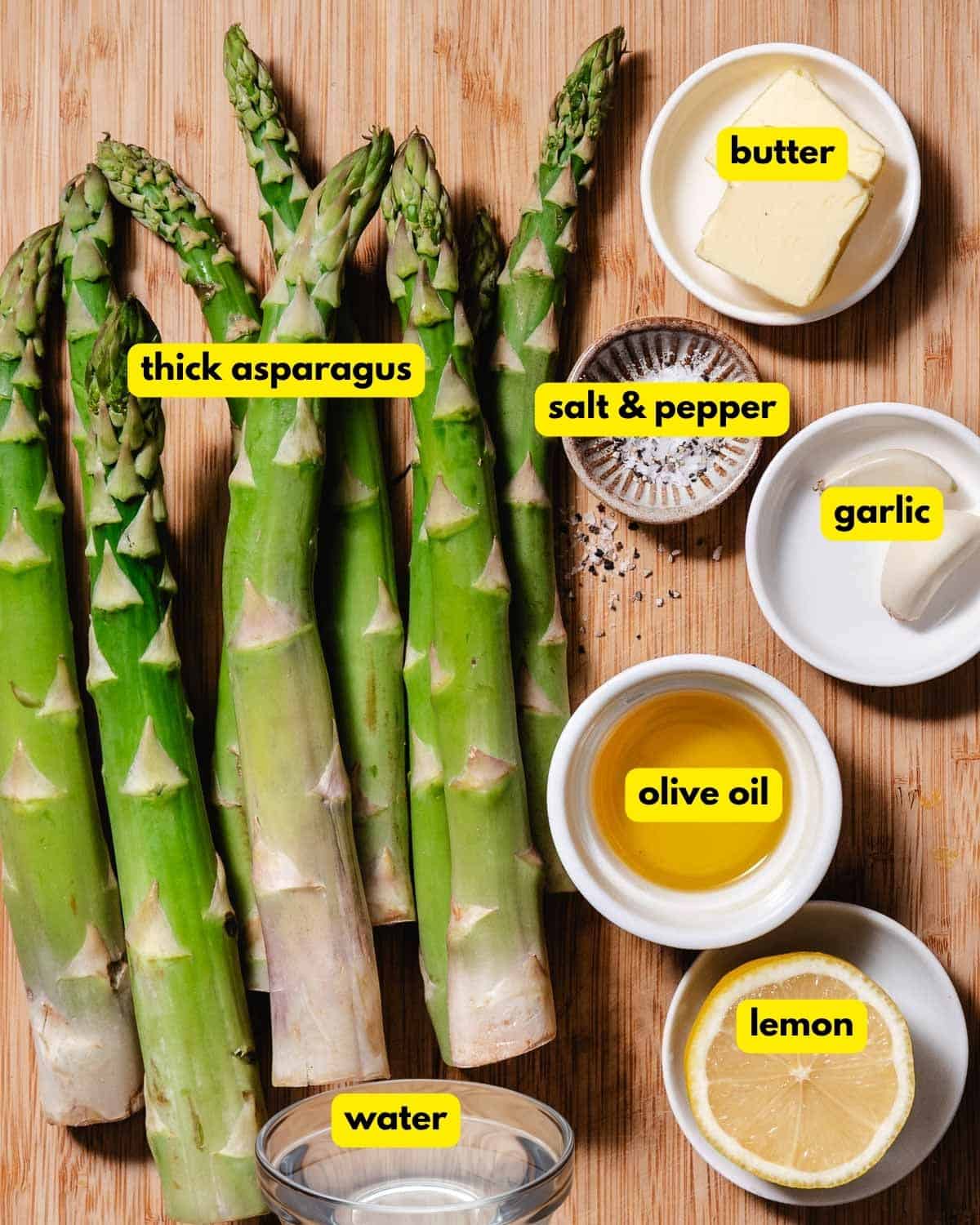
- Thick asparagus: Choose firm, bright green stalks at least ½ inch wide, with compact, tightly closed tips.
- Olive oil: Helps the asparagus brown and prevents it from sticking to the skillet.
- Salt and pepper: Season the asparagus before cooking to create layers of flavor.
- Water: Creates steam in the covered skillet, helping the thick stalks become tender.
- Butter: Forms the rich base of the finishing sauce.
- Garlic: Adds savory flavor to the melted butter. Cook it briefly so it doesn't burn.
- Lemon: Fresh lemon juice brightens the butter sauce.
How to Trim Asparagus
- Using a sharp knife, trim 1 to 2 inches from the tough ends of the asparagus. I prefer to trim thick stalks individually.
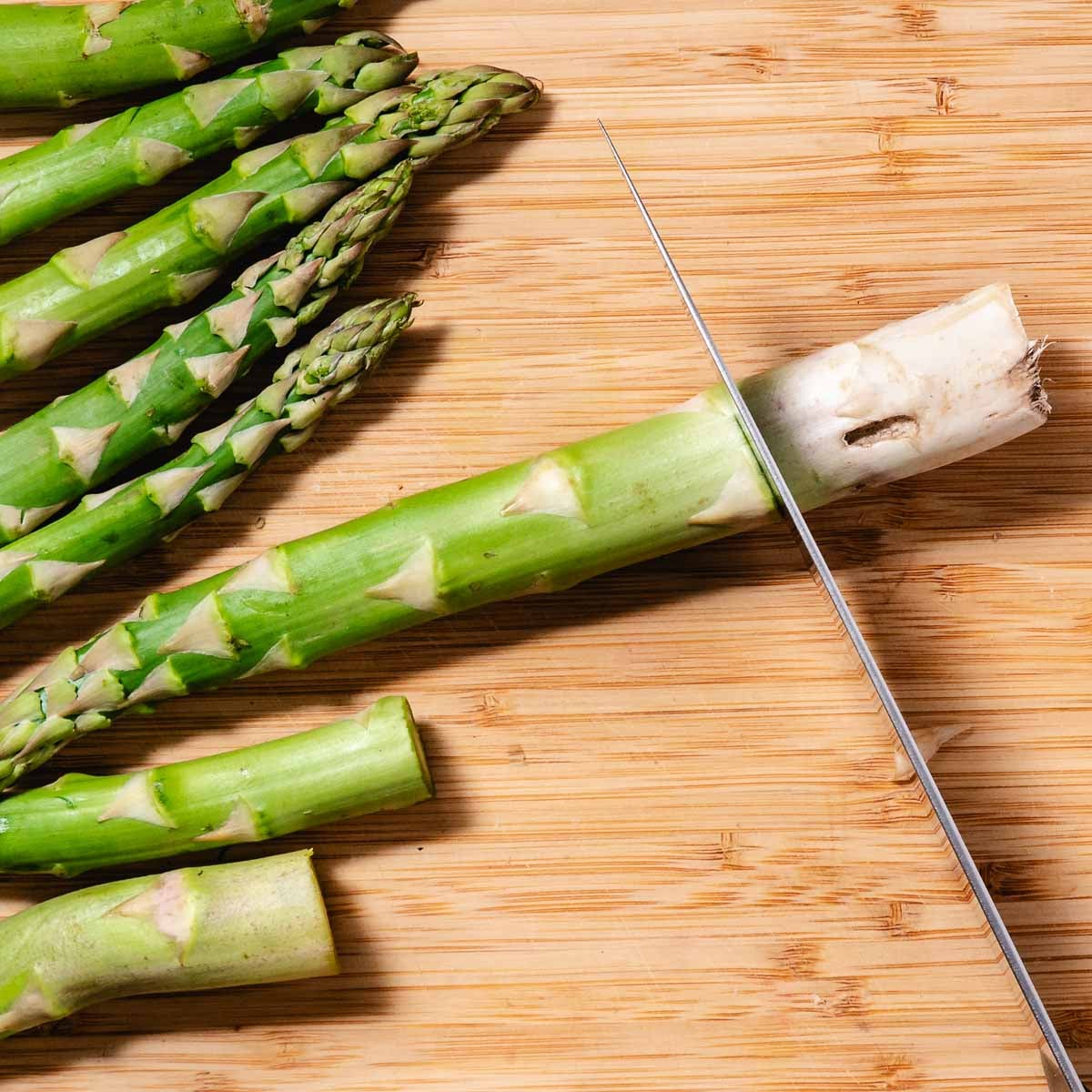
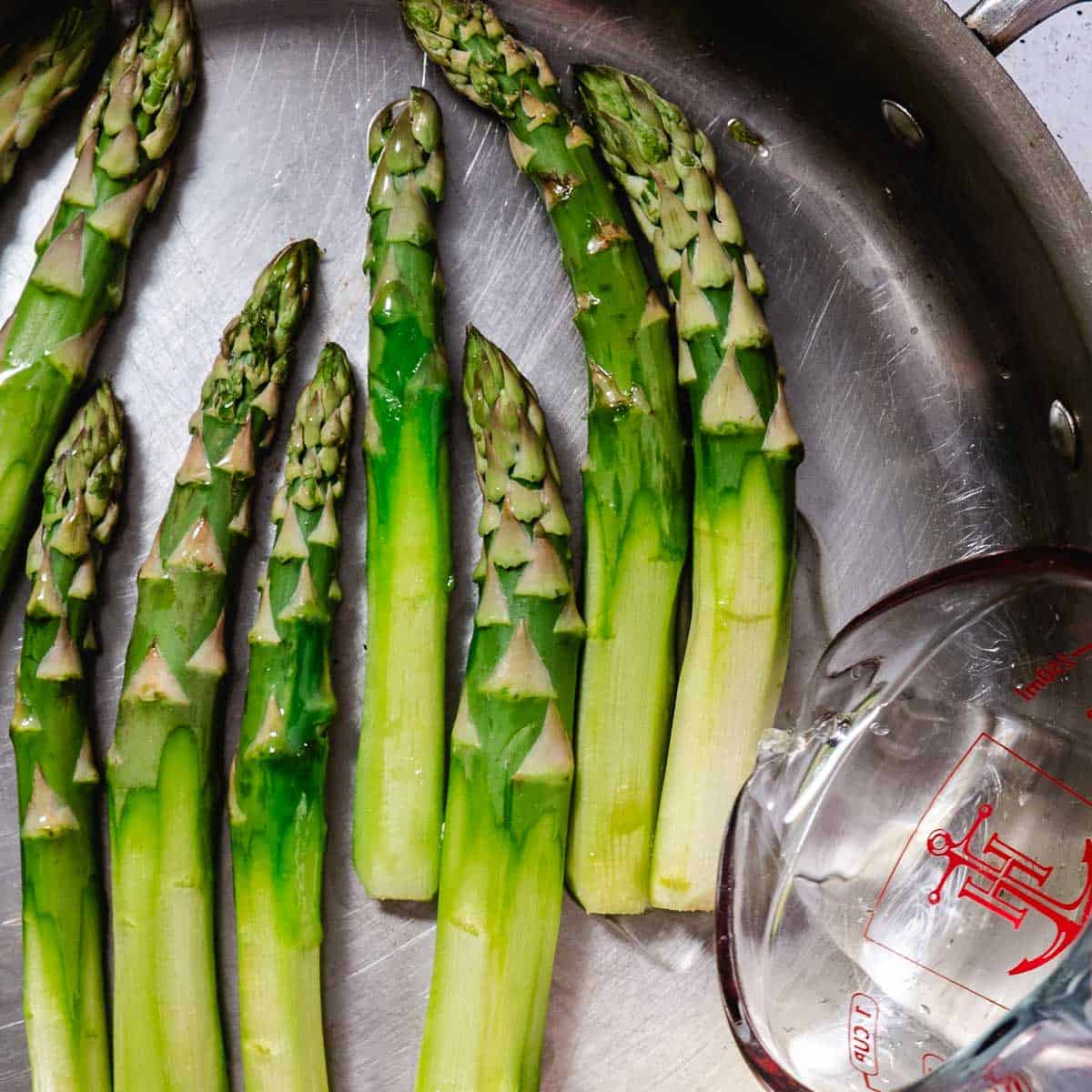
- Lay the asparagus flat on a cutting board. Peel each stalk from just below the tips to the trimmed end. Keep the stalks flat while peeling so they don't snap.
How to Sauté Thick Asparagus
- Heat the olive oil in a large skillet over medium-high heat until shimmering.
- Arrange the asparagus in a single layer and season lightly with salt and pepper. Carefully pour in ¼ cup of water. Cover and cook for 5 minutes, shaking the pan occasionally.
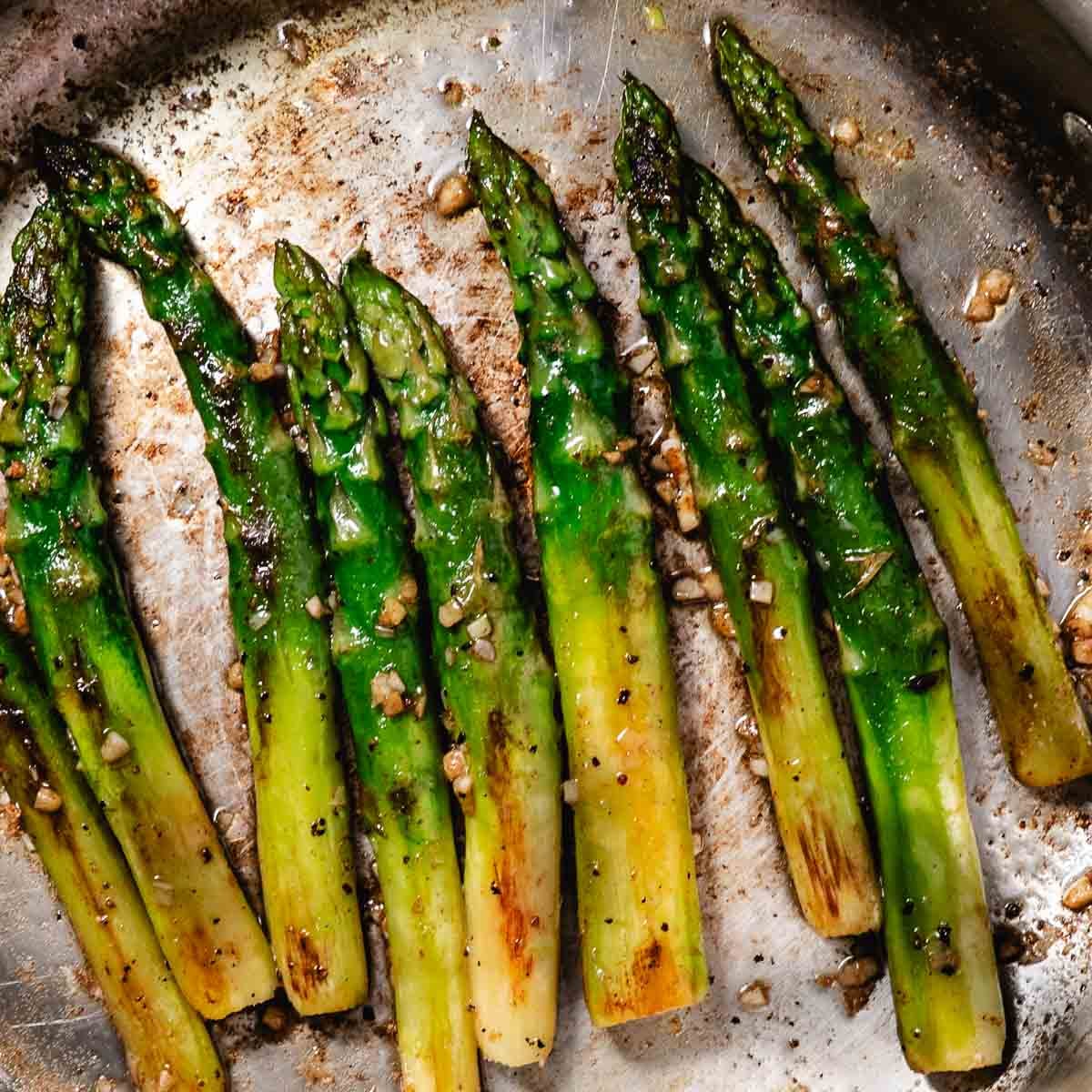
- Remove the lid and reduce the heat to medium. Sauté for about 3 minutes, tossing frequently, until the asparagus is browned in spots and crisp-tender. Transfer it to a plate.
- Reduce the heat to low and add the butter to the same skillet. Once melted, add the garlic and cook for about 30 seconds, stirring constantly.
- Remove the skillet from the heat and stir in the lemon juice. Return the asparagus to the skillet and toss with the garlic-lemon butter. Serve hot.
Serving Suggestions
I like to serve the asparagus alongside whole roasted chicken, pan-seared steak, or Alaskan salmon for an easy side dish.
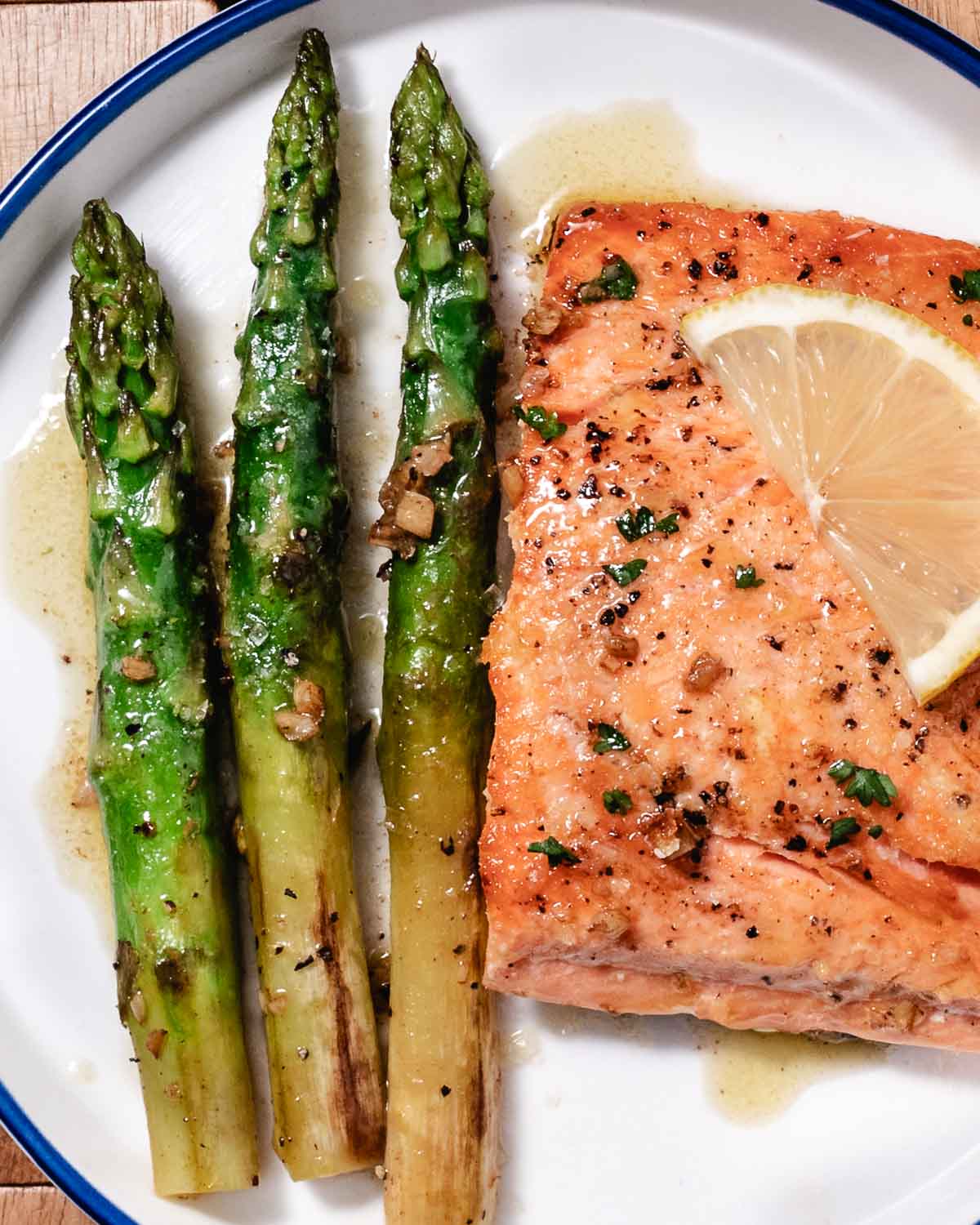
You can also cut each stalk into quarters and toss them with cooked pasta or rice, or serve the stalks whole over white rice.
Thick asparagus with lemon butter makes an easy Christmas or Thanksgiving side dish because it cooks quickly on the stovetop while the turkey and casseroles bake.
Storage and Reheating
Store leftover asparagus in an airtight container in the refrigerator for up to 3 days.
Reheat it in a skillet over medium heat until warmed through, or microwave briefly in 30-second intervals.
More Stovetop Vegetable Recipes
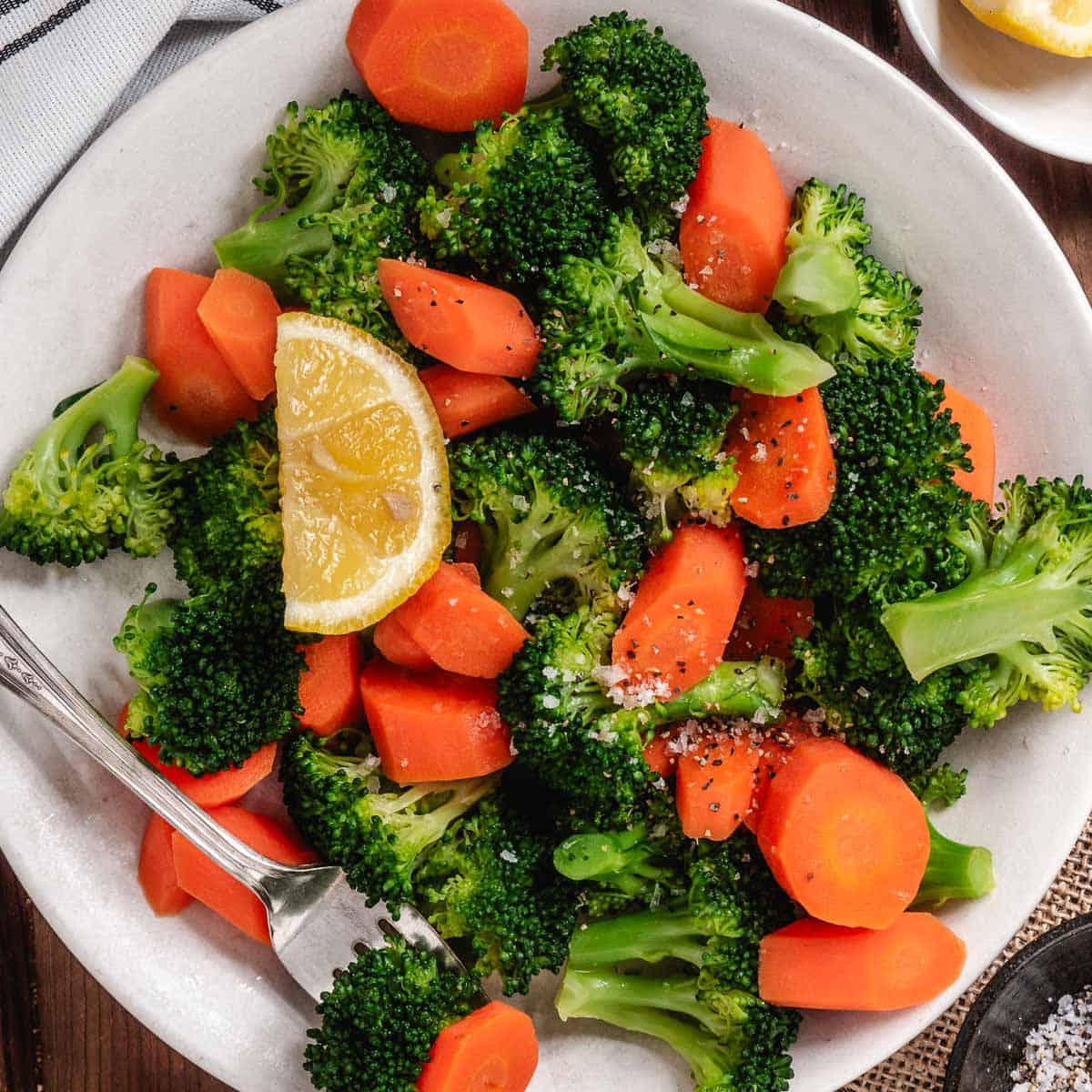
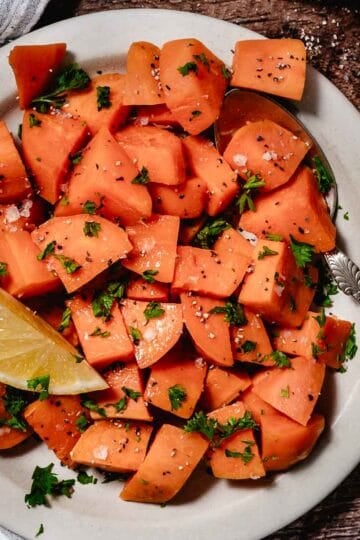
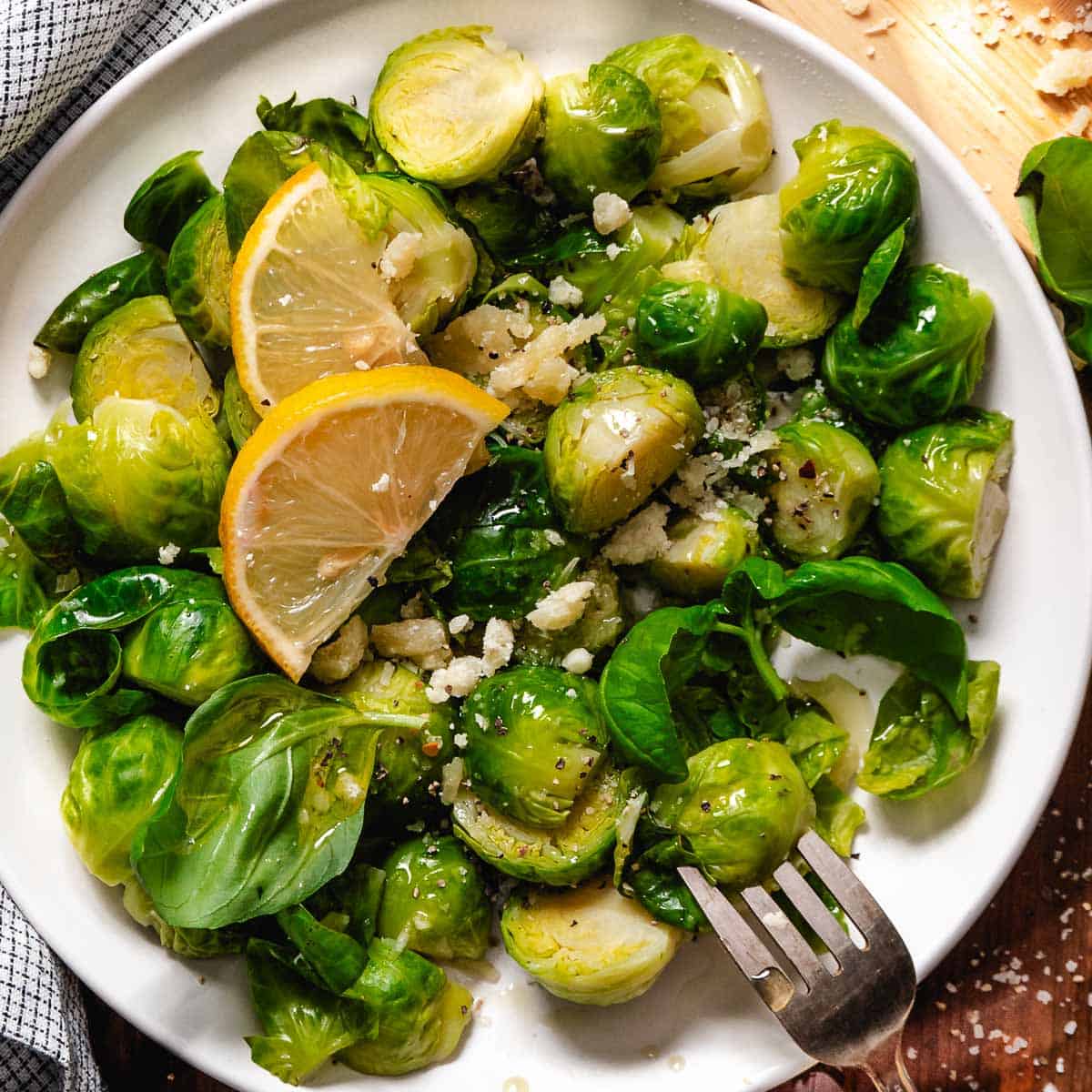
Try these easy stovetop vegetable recipes for simple, delicious weeknight and holiday vegetable dishes.

FAQ: How To Cook Thick Asparagus
No. Thick asparagus cooks especially well in a covered skillet, where a small amount of water creates steam to tenderize the stalks before you sauté them until browned.
Thick asparagus is about ½ inch or more in diameter at the base, roughly the width of an index finger. The spears grow thick from the start; they are not thin stalks that became thick with age.
Yes. Peeling removes the tough outer layer and helps the stalks cook as quickly as the tender tips.
The asparagus is ready when it's bright green, browned in spots, and easily pierced with a fork while still slightly firm.
Yes. Trim and peel the asparagus up to one day ahead, then refrigerate it in an airtight container until you're ready to cook.
Thick asparagus has a rich, earthy flavor that's slightly sweet and less grassy than thin spears. When properly peeled and cooked, the stalks are tender and juicy with a satisfyingly meaty texture.
If you tried this recipe for thick asparagus with lemon butter or any other recipe on my blog, please leave a 🌟 star rating and let me know how it goes in the comments. I love hearing from you!
How to Cook Thick Asparagus with Lemon Butter
Equipment
- Cutting board
- Sharp knife
- Swivel vegetable peeler
- Large skillet or sauté pan with a lid
- Wooden spoon or spatula
Ingredients
- 1 pound thick asparagus, trimmed and peeled
- 1 tablespoon olive oil
- ¼ cup water
- ¼ teaspoon kosher salt
- freshly ground black pepper
- 2 tablespoons unsalted butter
- 2 cloves garlic, minced
- 1 tablespoon fresh lemon juice
Instructions
- Using a sharp knife, cut 1 to 2 inches off the tough ends. Lay each spear flat on a cutting board and peel from just below the tip to the trimmed end. Rinse and pat dry.
- Heat the olive oil in a large skillet over medium-high heat until shimmering.
- Arrange the asparagus in a single layer and season with salt and pepper. Carefully pour in the water. Cover and cook for 5 minutes, shaking the pan occasionally.
- Remove the lid and reduce the heat to medium. Sauté for about 3 minutes, tossing frequently, until the asparagus is browned in spots and crisp-tender. Transfer to a plate.
- Reduce the heat to low and add the butter to the skillet. Once melted, add the garlic and cook for about 30 seconds, stirring constantly.
- Remove the skillet from the heat and stir in the lemon juice. Return the asparagus to the skillet and toss with the garlic-lemon butter. Serve hot.
Notes
- Choose thick asparagus spears that are at least ½ inch wide at the base.
- Keep each spear flat on the cutting board while peeling to prevent it from snapping.
- Use a skillet large enough to arrange the asparagus in one layer. Cook in batches if necessary.
- For thinner asparagus: Skip peeling and reduce the cooking time. Add only a splash of water, cover for 2 to 3 minutes, then sauté uncovered just until crisp-tender.
- Storage: Store leftovers in an airtight container in the refrigerator for up to 3 days.
Leave a Reply
You must be logged in to post a comment.