

Pan-seared coho salmon has crispy skin, tender, flaky flesh, and a simple garlic butter pan sauce finished with fresh lemon or lime juice. It cooks in about 15 minutes and makes an easy dinner with rice, potatoes, or vegetables.
Jump to:
Why I Made This Coho Salmon
I can hear it already: "Felice, you live in the Florida Keys. Why on earth are you cooking frozen fish?"
Trust me, I get it. With fresh local snapper and grouper practically in my backyard, buying frozen seafood sounds a little crazy. But lately I've been focused on getting back to a simpler, nutrient-dense way of eating. Clean, minimally processed food and protein I actually feel good about.
So when Wild Alaskan Company sent me a box of mixed fish to try, I reached for this gorgeous coho first.
Wild Alaskan Company sent me this fish at no cost. I'm not being paid for this post and there are no affiliate links. All opinions are my own.
I'll always love our local Keys fish, but coho earns its spot in my freezer. It's moderately rich, leaner than king and fattier than pink, which means it sears beautifully. It's also loaded with protein, omega-3s, and astaxanthin, the antioxidant that gives salmon its color.
A hot skillet gets the skin shatter-crisp. Finish it with a quick pan sauce of butter, garlic, and a squeeze of lime. Almost no effort, and it tastes like a total treat.
What Is Coho Salmon?
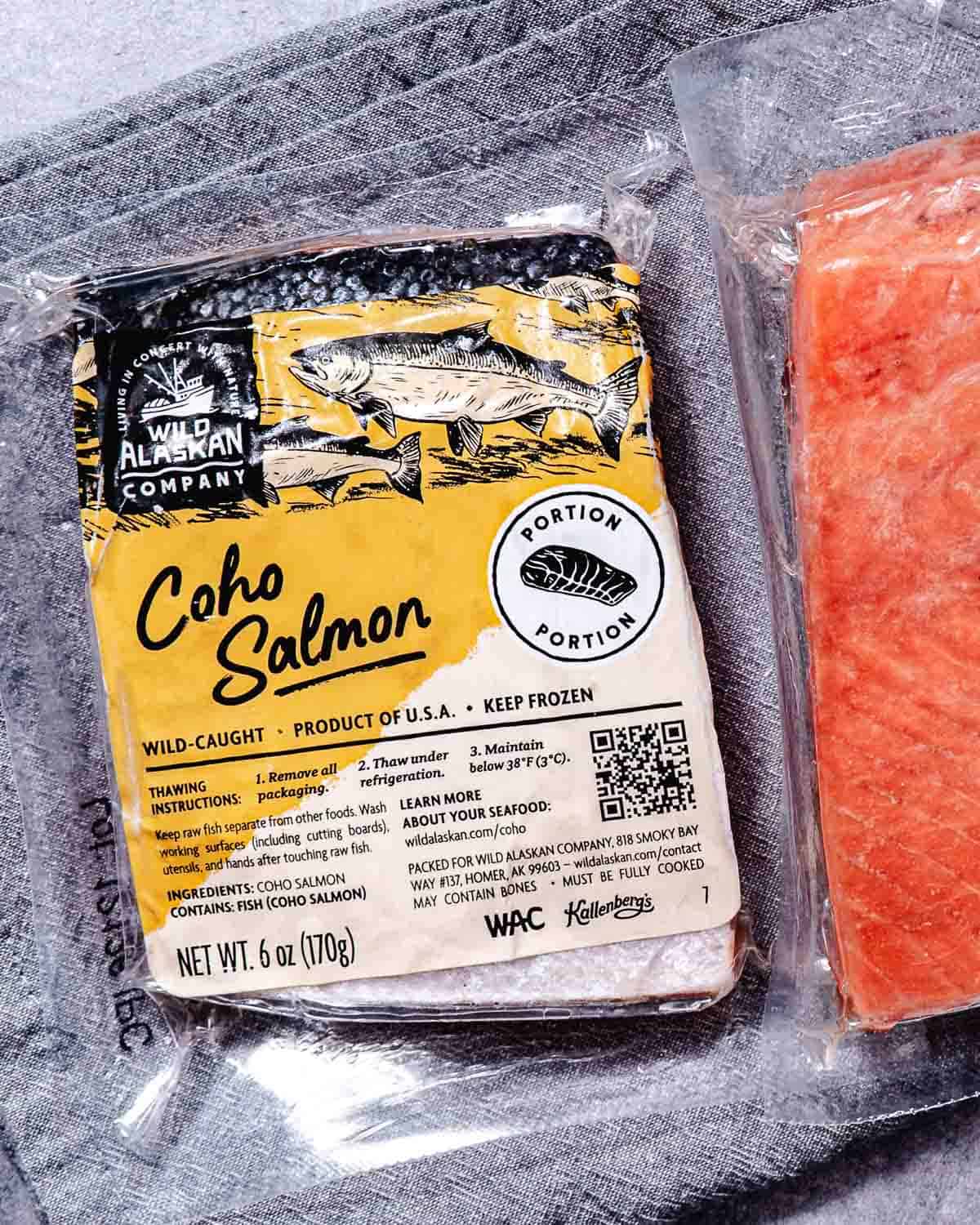
Coho salmon, also called silver salmon, is a species of Pacific salmon known for its mild flavor, firm texture, and rich orange-red flesh. It is less oily than king salmon but richer than pink salmon, making it a good choice for pan-searing, baking, grilling, and roasting.
Wild coho salmon is caught in the Pacific Ocean, including the waters around Alaska. It is often sold frozen, making it convenient to keep on hand for quick dinners.
Because coho salmon is leaner than some other varieties, it cooks quickly and can dry out when overcooked.
How To Defrost Salmon Quickly
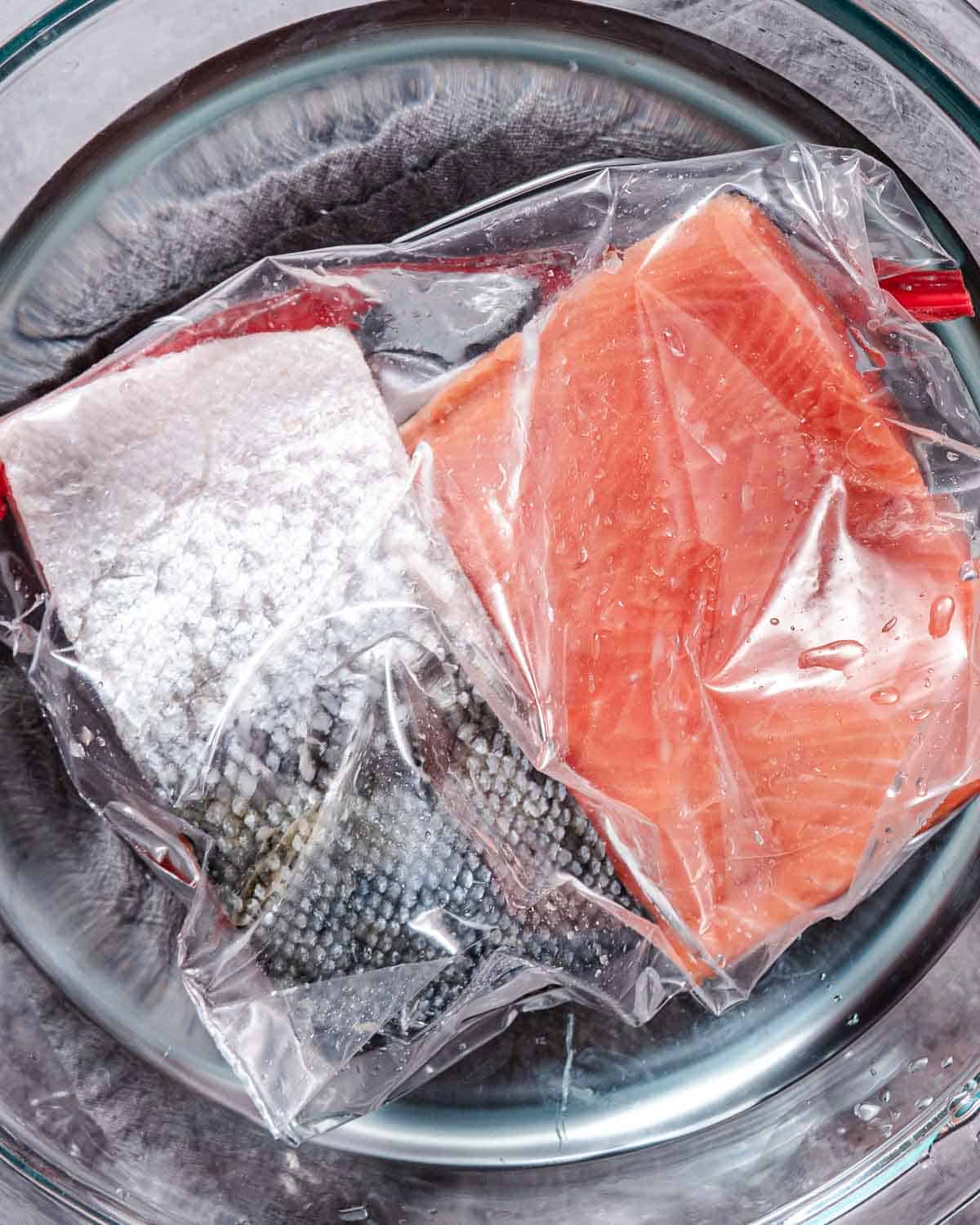
Remove the salmon from its vacuum-sealed package and place it in a leakproof zip-top bag. Submerge the bag in cold water, changing the water every 30 minutes.
Individual fillets usually thaw within 30 to 60 minutes. Pat the salmon dry and cook it immediately.
Ingredients
See recipe card below for exact amounts.
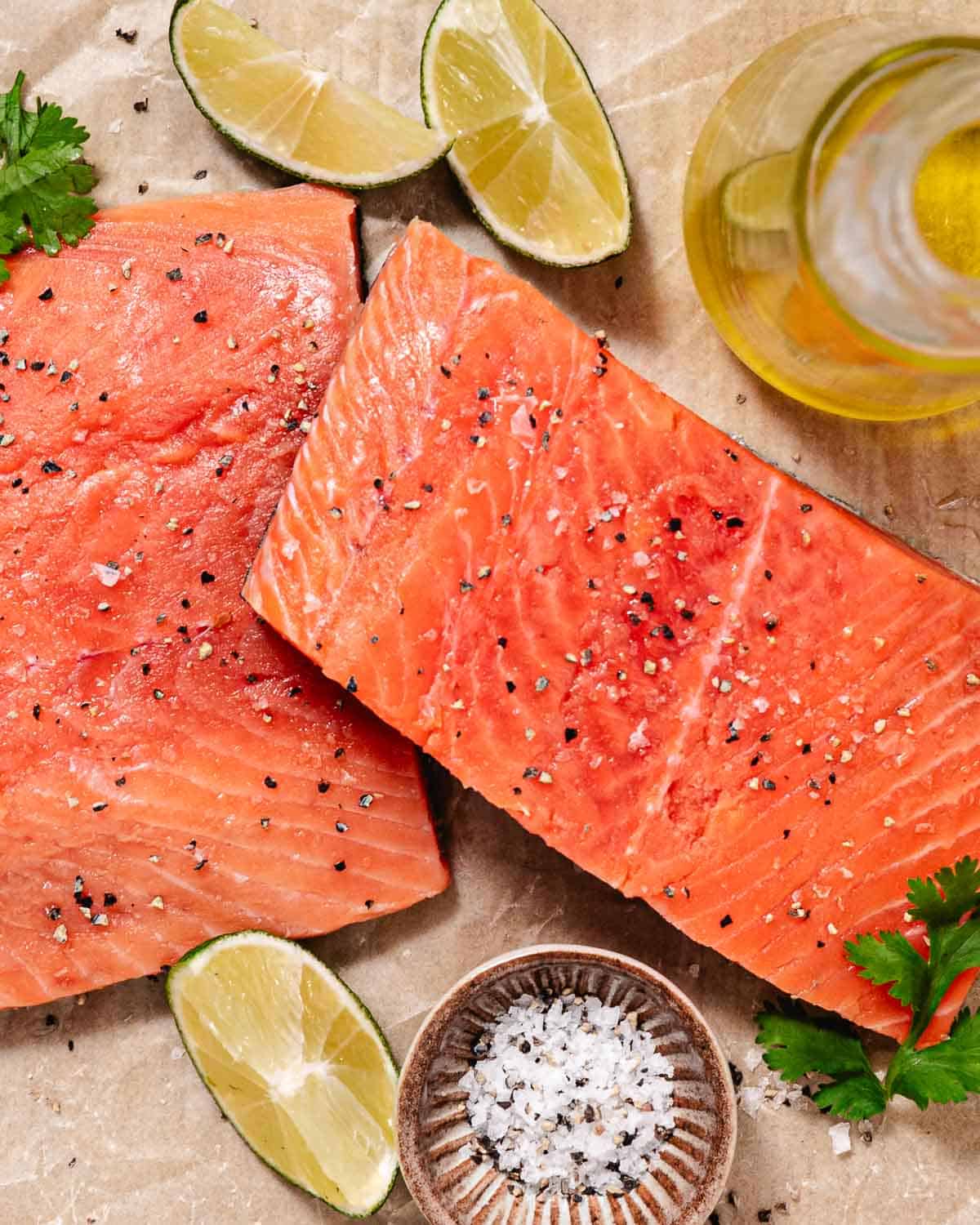
- Coho salmon fillets
- Olive oil
- Kosher salt
- Black pepper
- Butter
- Garlic, minced
- Fresh lemon or lime juice
- Lemon or lime wedges, for serving
How to Make Pan-Seared Salmon
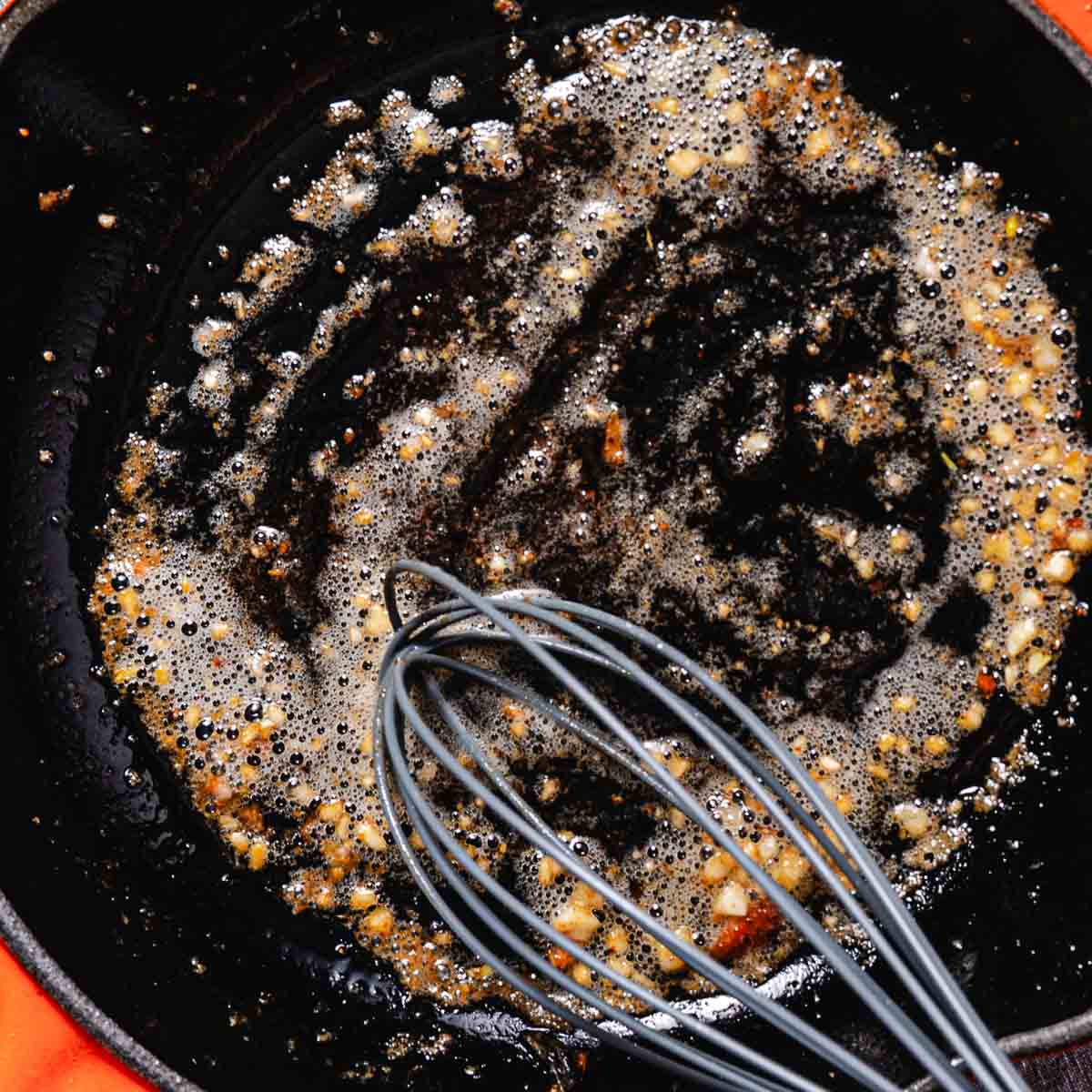
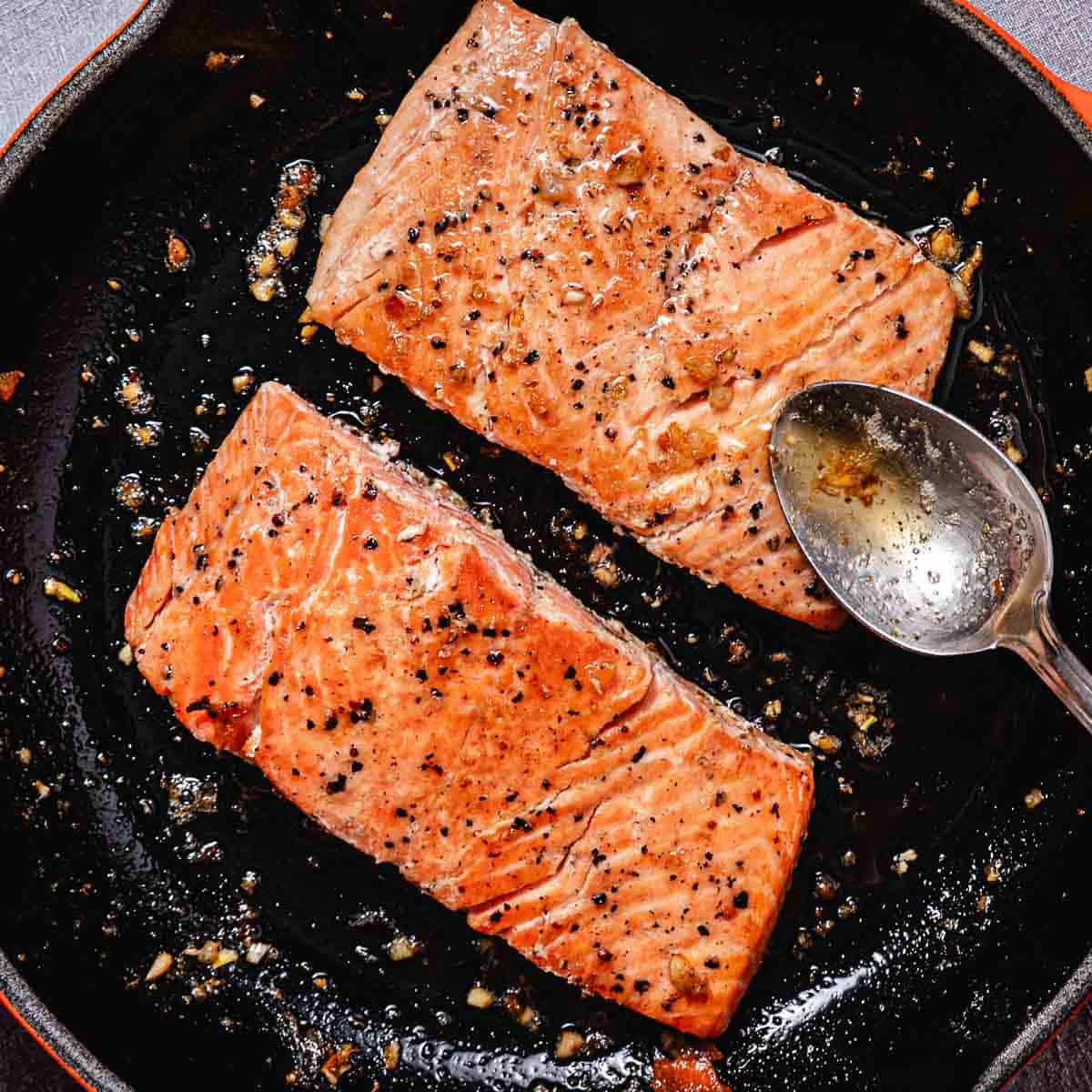
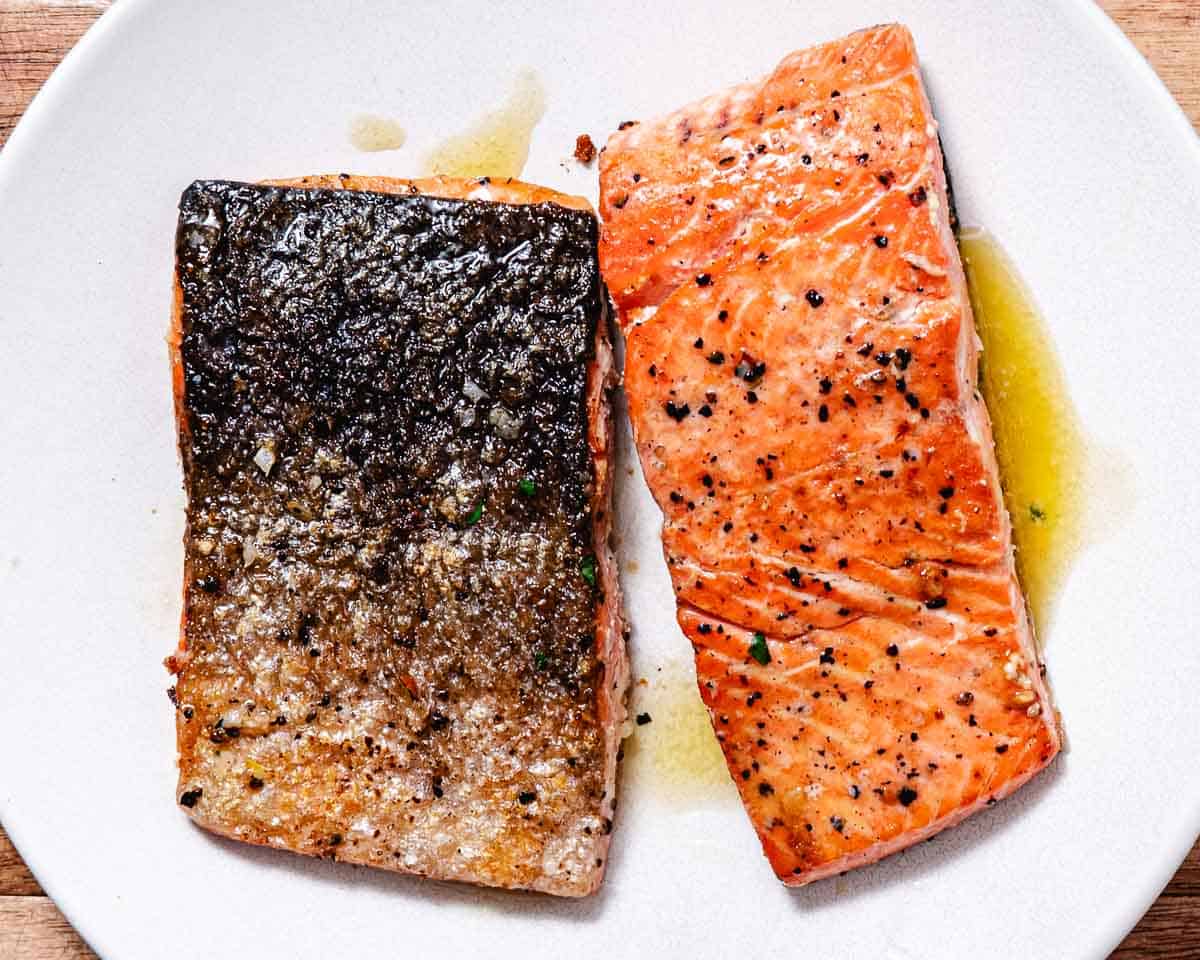
- Pat the thawed salmon very dry with paper towels. Season both sides with kosher salt and black pepper.
- Heat the olive oil in a large skillet over medium-high heat.
- Place the salmon in the skillet skin-side down. Press each fillet gently with a fish spatula for about 30 seconds to keep the skin flat.
- Cook for 4 to 5 minutes without moving the fish, until the skin is crisp and the salmon is about halfway cooked.
- Flip the salmon and cook for about 1 minute, until the thickest part registers 120°F on an instant-read thermometer. It will climb to about 125°F as it rests.
- Reduce the heat to low. Add the butter and minced garlic. Cook for about 30 seconds, just until the garlic is fragrant.
- Squeeze in the lemon or lime juice. Tilt the skillet slightly and spoon the garlic citrus butter over the salmon for about 1 minute.
- Remove the salmon from the heat and serve right away, spooning the pan sauce over the top.
- Serve with lemon or lime wedges and your choice of vegetables, rice, or potatoes.
Top Tips
- Pat the salmon very dry before seasoning so the skin crisps properly.
- Place the salmon skin-side down and press it gently with a fish spatula for about 30 seconds to keep the fillet flat.
- Coho is leaner than king salmon, so the window between perfect and overcooked is short. Pull it at 120°F for medium, or 125°F if you like it more opaque throughout. Carryover heat adds about 5 degrees while it rests.
- Do not move the salmon while the skin is browning. Let it cook undisturbed until crisp.
- Lower the heat before adding the butter and garlic so the garlic does not burn.
- Let the salmon rest for about 2 minutes before serving.
Pan-Seared Coho Salmon with Garlic Butter
Ingredients
- 2 coho salmon fillets, about 6 ounces each
- 1 tablespoon olive oil
- Kosher salt and black pepper
- 2 tablespoons butter
- 1 small garlic clove, minced
- 1 tablespoon fresh lemon or lime juice
- Lemon or lime wedges for serving
Instructions
- Pat the thawed salmon very dry with paper towels. Season both sides with kosher salt and black pepper.
- Heat the olive oil in a large skillet over medium-high heat.
- Place the salmon in the skillet skin-side down. Press each fillet gently with a fish spatula for about 30 seconds to keep the skin flat.
- Cook for 4 to 5 minutes without moving the fish, until the skin is crisp and the salmon is cooked about halfway up the sides.
- Flip the salmon and cook for about 1 minute, until the thickest part registers 120°F on an instant-read thermometer. It will climb to about 125°F as it rests.
- Reduce the heat to low. Add the butter and minced garlic. Cook for about 30 seconds, just until the garlic is fragrant.
- Squeeze in the lemon or lime juice. Tilt the skillet slightly and spoon the garlic citrus butter over the salmon for about 1 minute.
- Remove the salmon from the heat and serve right away with the pan sauce spooned over the top and lemon or lime wedges on the side.
Notes
Nutrition
Storage and Reheating
Store leftover coho salmon in an airtight container in the refrigerator for up to 3 days.
Reheat it gently in a covered skillet over low heat with a small pat of butter, or warm it in a 300°F oven until heated through.
Avoid high heat, which can dry out the salmon. Leftover salmon can also be flaked and served cold over salad, pasta, or vegetables.
What to Serve With Coho Salmon
Pan-seared coho salmon pairs well with simple rice, potato, vegetable, and salad recipes. Try it with:
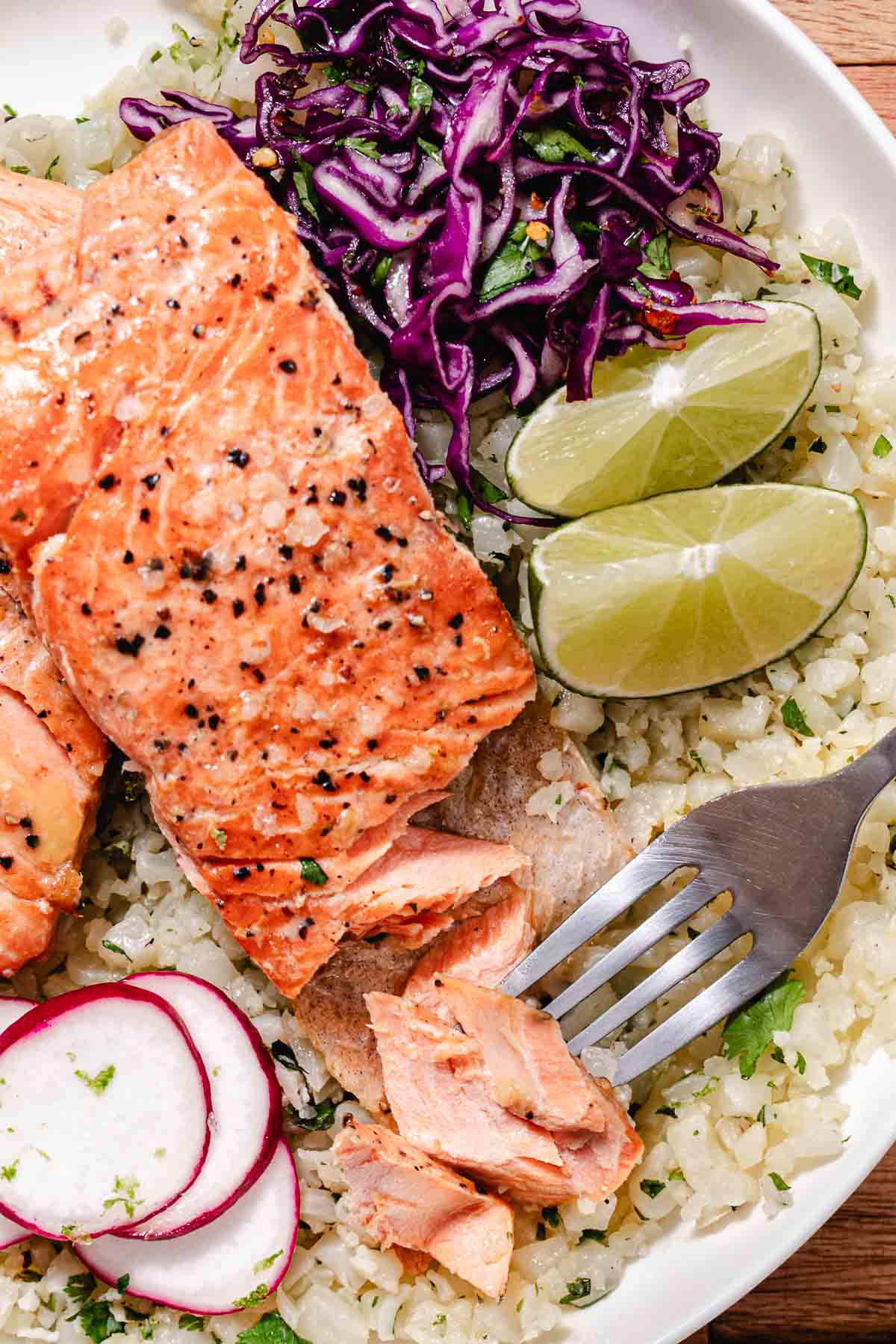
- Cilantro Lime Cauliflower Rice
- Lemon Asparagus Rice
- Steamed Asparagus
- Crispy Roasted Baby Potatoes
- Steamed Red Potatoes with Butter and Parsley
- Mixed Garden Salad
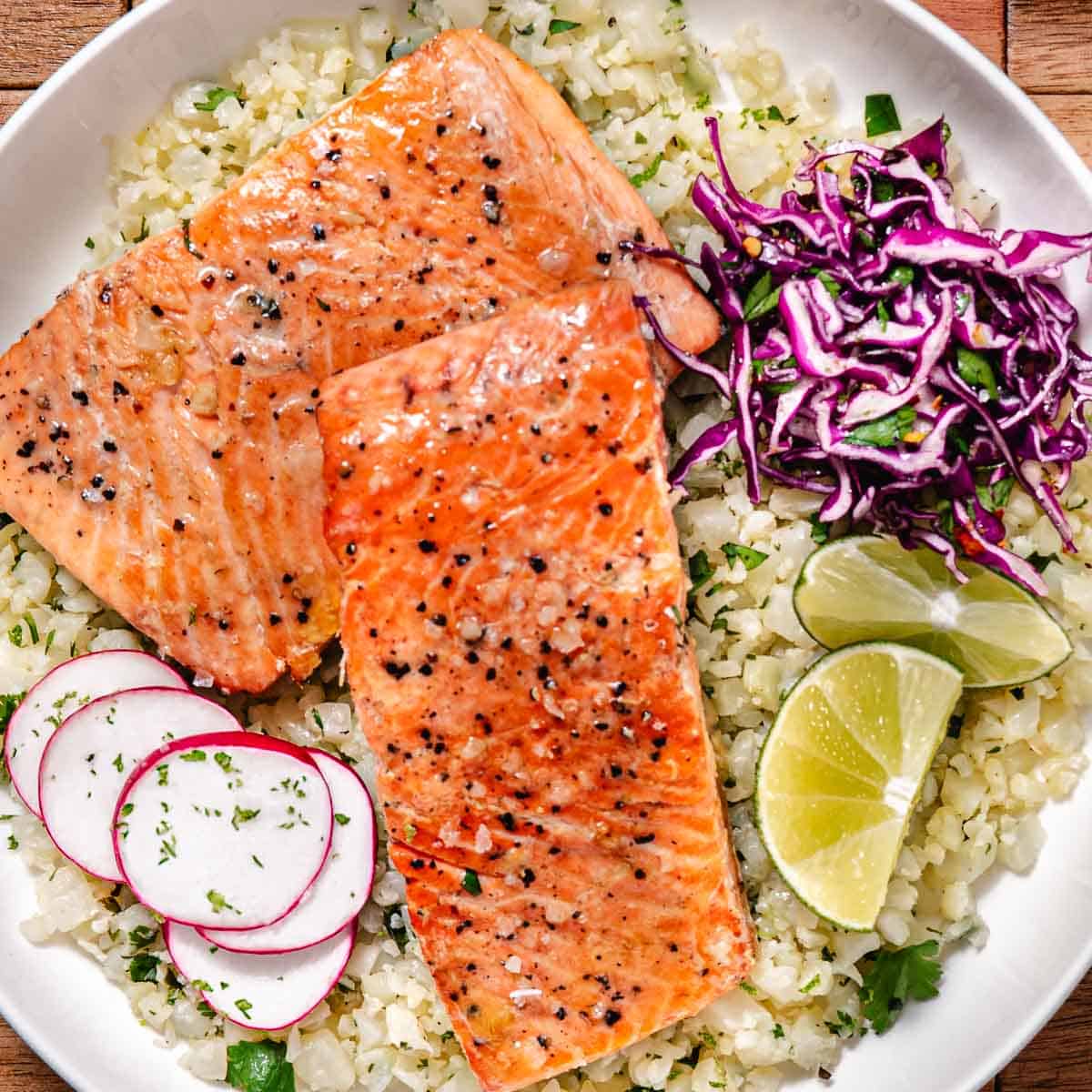
For a low-carb dinner, serve the salmon with cauliflower rice, sliced radishes, and shredded red cabbage mixed with olive oil, lime juice, cilantro and a few chili flakes. It makes a great meal!
Where I Get My Salmon
The coho in this recipe came from Wild Alaskan Company. It arrived in Key Largo in the middle of summer, 95 degrees outside, packed on dry ice that was still almost fully intact when I opened the box. The fish was frozen solid.
I'll be ordering again. It's an excellent product.
FAQ
It is best to thaw coho salmon before pan searing. Thawed salmon cooks more evenly, and the dry skin has a better chance of becoming crisp.
The salmon should flake easily with a fork and look moist in the center. For a temperature check, pull it at 120°F for medium and let carryover heat bring it to about 125°F as it rests. The USDA recommends 145°F, which is safe but well past where salmon stays tender. Coho is lean, so err on the early side.
Almost always because it was moved too soon. Salmon skin releases on its own once it has crisped, so if it resists the spatula, it is not ready. Give it another 30 to 60 seconds and try again. A properly preheated pan and thoroughly dried skin make the release happen faster.
Coho salmon has a mild, clean flavor with a slightly rich taste. It is leaner than king salmon, also called Chinook salmon. In my experience, wild salmon tastes far better than farm-raised salmon.
Yes. Sear the presentation side first for 3 to 4 minutes, then flip and finish for 1 to 2 minutes. You will not get crisp skin, but you will still get good color and the garlic butter sauce works exactly the same.
Yes. Follow the directions on the package. Remove the salmon from the vacuum pouch before thawing, then place it in a leakproof zip-top bag if you are using the cold-water method.
No, coho can be wild or farm-raised. Check the package for the words wild-caught along with a country and region of origin. A label that names a specific place, like Product of the USA, sourced from Alaska, is a stronger signal than the word wild on its own.
A well-seasoned cast-iron skillet or heavy stainless-steel skillet works well. Heat the pan before adding the salmon so the skin begins crisping right away.


Leave a Reply
You must be logged in to post a comment.