

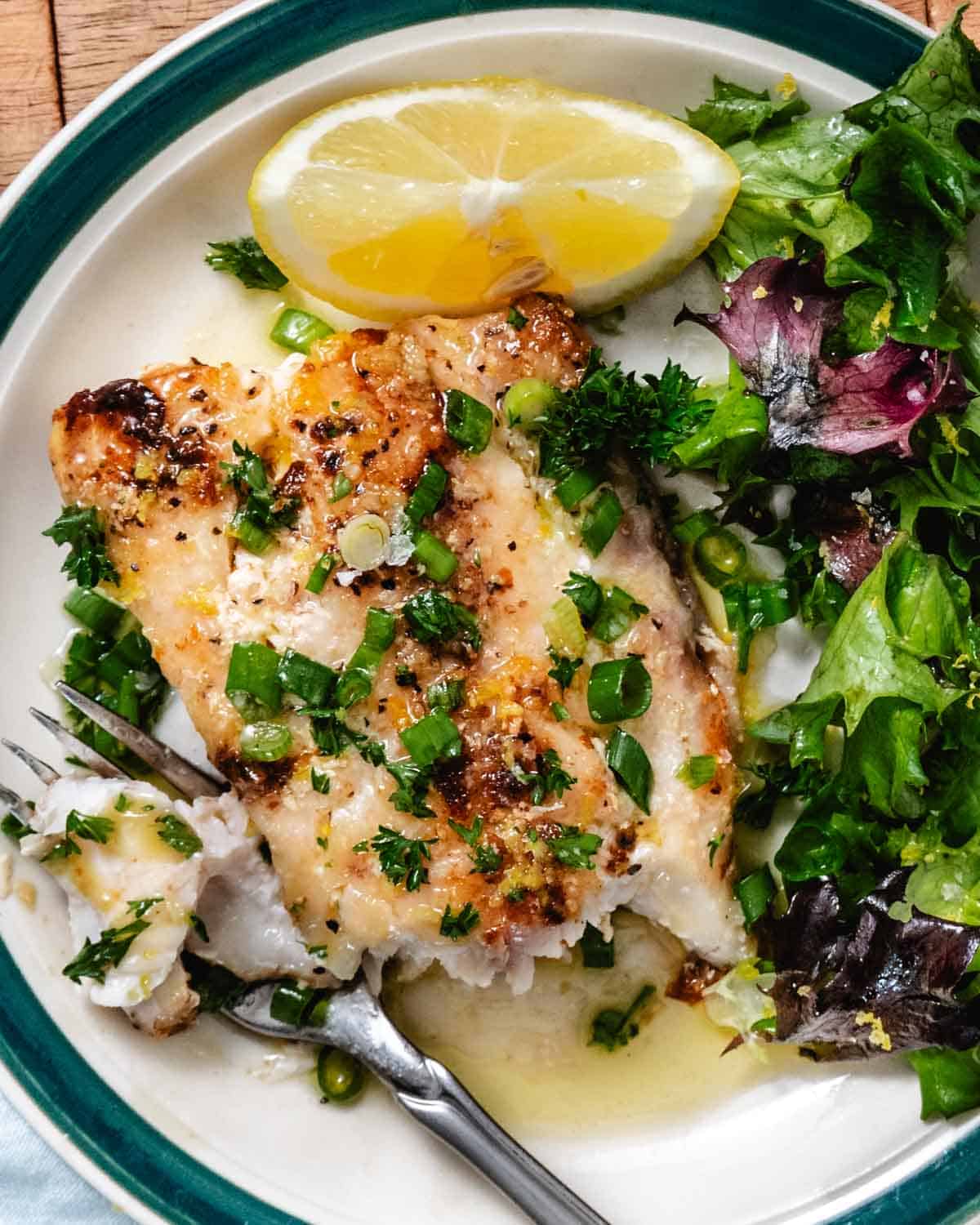
Pan-seared tilefish is one of the easiest ways to cook fresh tilefish at home. This mild white fish cooks in under 10 minutes and develops a golden crust in a hot skillet. Searing in oil first, then basting with butter at the end, gives you a crisp exterior and a tender, flaky center.
Jump to:
Pan-seared tilefish is a fast, simple way to cook this mild white fish. Sear it in a hot pan, then baste with butter, garlic, and lemon zest for flavor. It's ready in under 10 minutes and tastes slightly sweet and delicate.
What is Tilefish?
Tilefish is a mild white fish found in deep waters off the East Coast of the United States and in the Gulf of Mexico. It's available year-round.
In Florida, the tilefish sold at local markets is usually golden tilefish, known for its mild flavor and firm texture.
Tilefish is sometimes called the 'clown of the sea' because of its bright, colorful skin.
The fillets are thick, hold their shape well, and cook evenly in a hot skillet.
It's slightly richer than cod but milder than snapper. When pan-seared, tilefish develops a golden crust on the outside while staying tender inside.
If you're looking for a mild white fish that feels a little more special than the everyday options, tilefish is a great choice.
What Does Tilefish Taste Like?
Tilefish is one of the best-tasting fish you can eat!
I eat a lot of fish, and this is gold!
Tilefish has a firm, flaky texture and a clean, slightly sweet flavor. It is milder than snapper and a little richer than grouper.
After one bite, you'll start thinking about when you can get it again.
Purchasing Tilefish
If you're headed to the fish market, look closely before you buy. Fresh tilefish should have firm flesh that springs back when you press it lightly. The surface should look moist and clean, not dull or slimy.
The color should be bright and even. Tilefish fillets are pale pink to off-white with a slight sheen. There should be no brown spots or drying around the edges.
Fresh tilefish should have a mild, clean scent. It should not smell fishy. Ask the fishmonger if you can smell it. If it's fishy, get something else.
If the skin is still on, it should look tight and glossy, not loose or wrinkled.
When in doubt, ask when it was delivered. Fresh fish sells quickly. That's always a good sign.
Removing the Bloodline and Bones
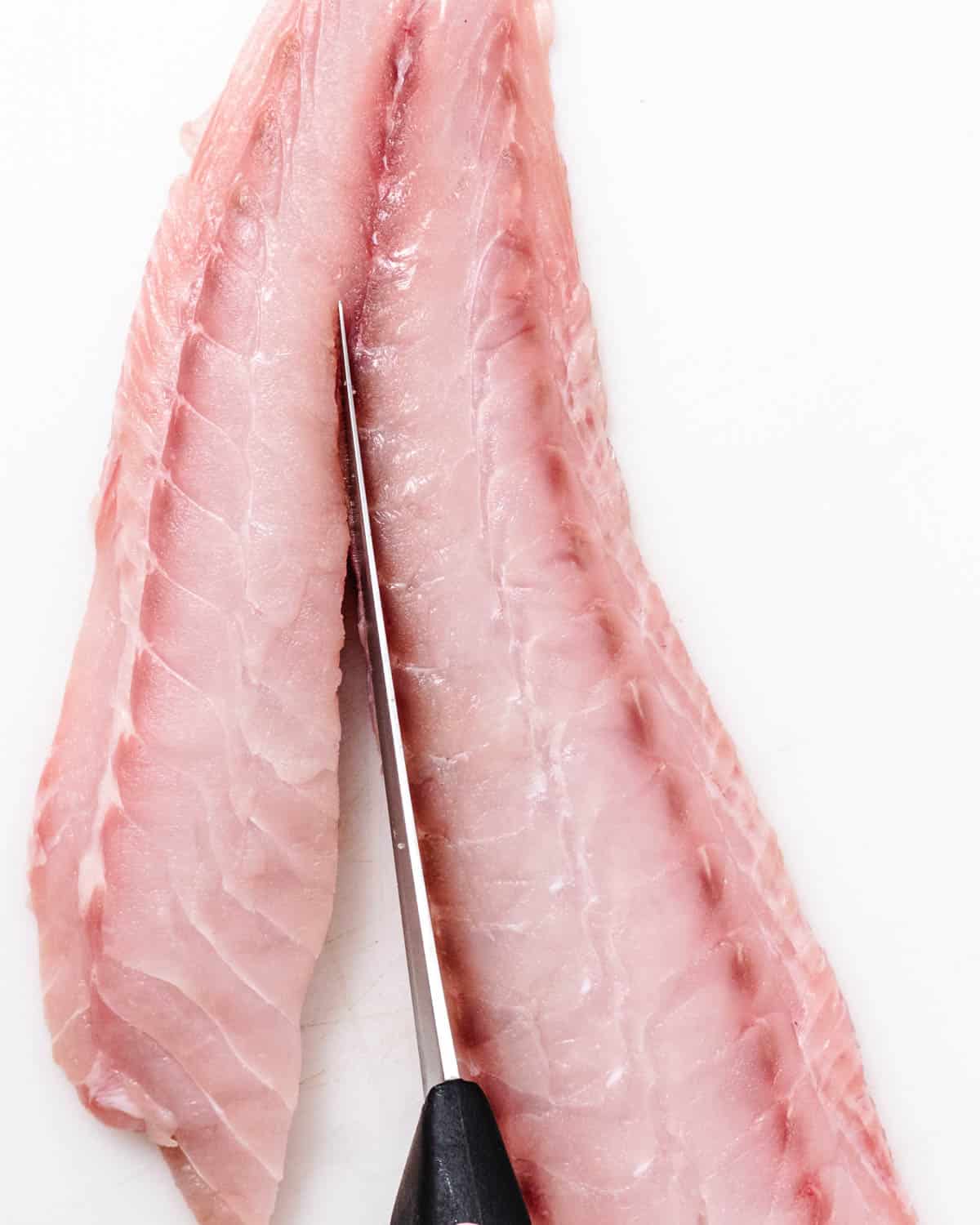
Tilefish fillets have a dark strip and a small row of pin bones running down the center.
To remove it, place the fish on a cutting board and run a sharp knife along one side of the bloodline. Then cut along the other side and lift the strip out.
My fillet is large, so after removing the bones, I sliced each half into two smaller pieces for cooking.
Tilefish vs. Snapper
Flavor: Tilefish is mild and slightly sweet. Snapper has a more pronounced, briny flavor that tastes more like the ocean.
Texture: Tilefish is smooth and delicate but still firm enough to hold together in a skillet. Snapper is firmer and flakes into larger pieces.
Richness: Tilefish is richer and silkier than snapper.
Best Cooking Methods: Both work well for pan-searing, roasting, and frying.
Ingredients
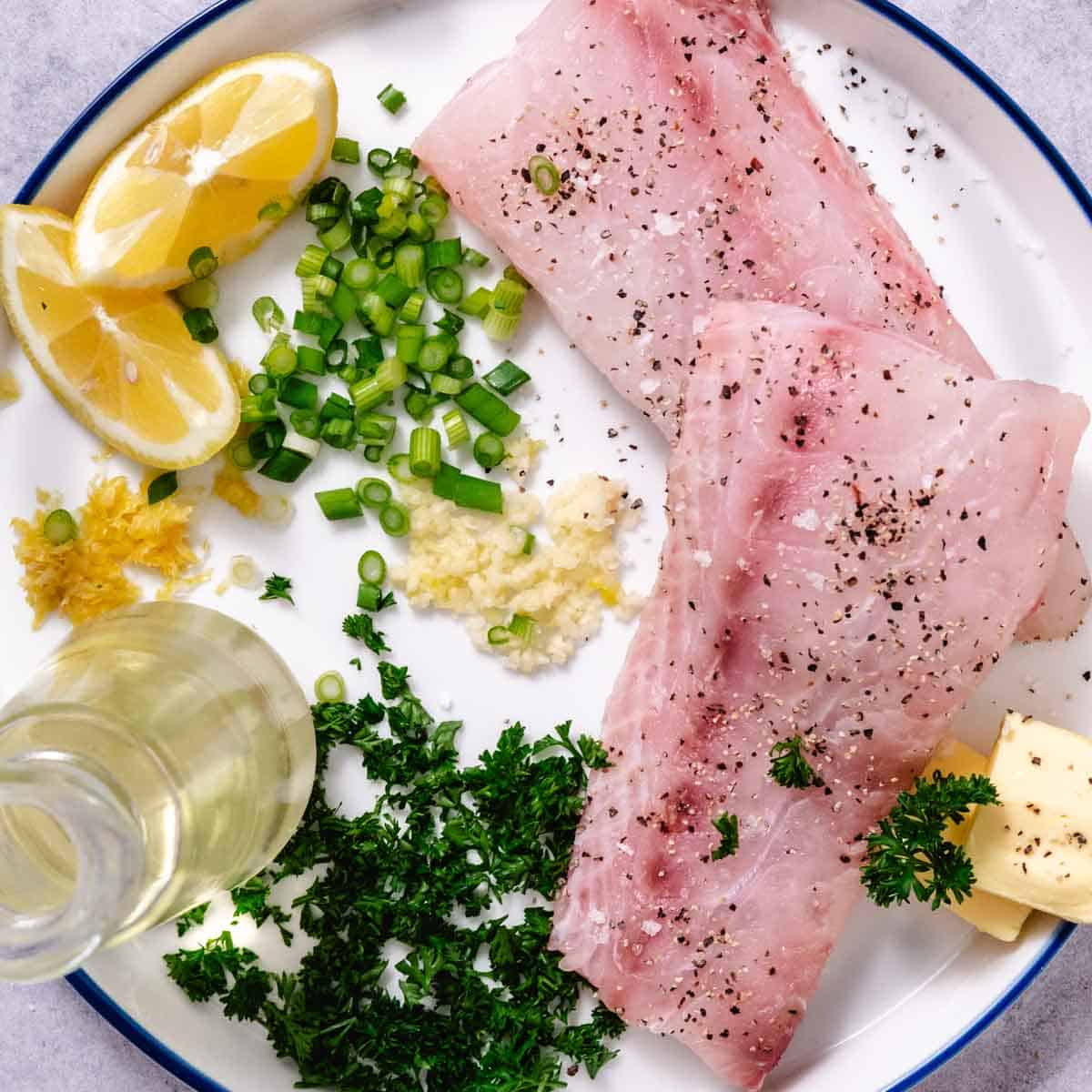
- 2 (6-ounce) tilefish fillets, skinless and boneless
- Sea salt
- Freshly ground black pepper
- 1 tablespoon olive oil
- 2 tablespoons unsalted butter
- 1 teaspoon lemon zest
- 1 clove garlic, minced
- 2 scallions (green onions), thinly sliced
- 2 tablespoons chopped curly-leaf parsley
- Lemon wedges, for serving
How To Sear Tilefish
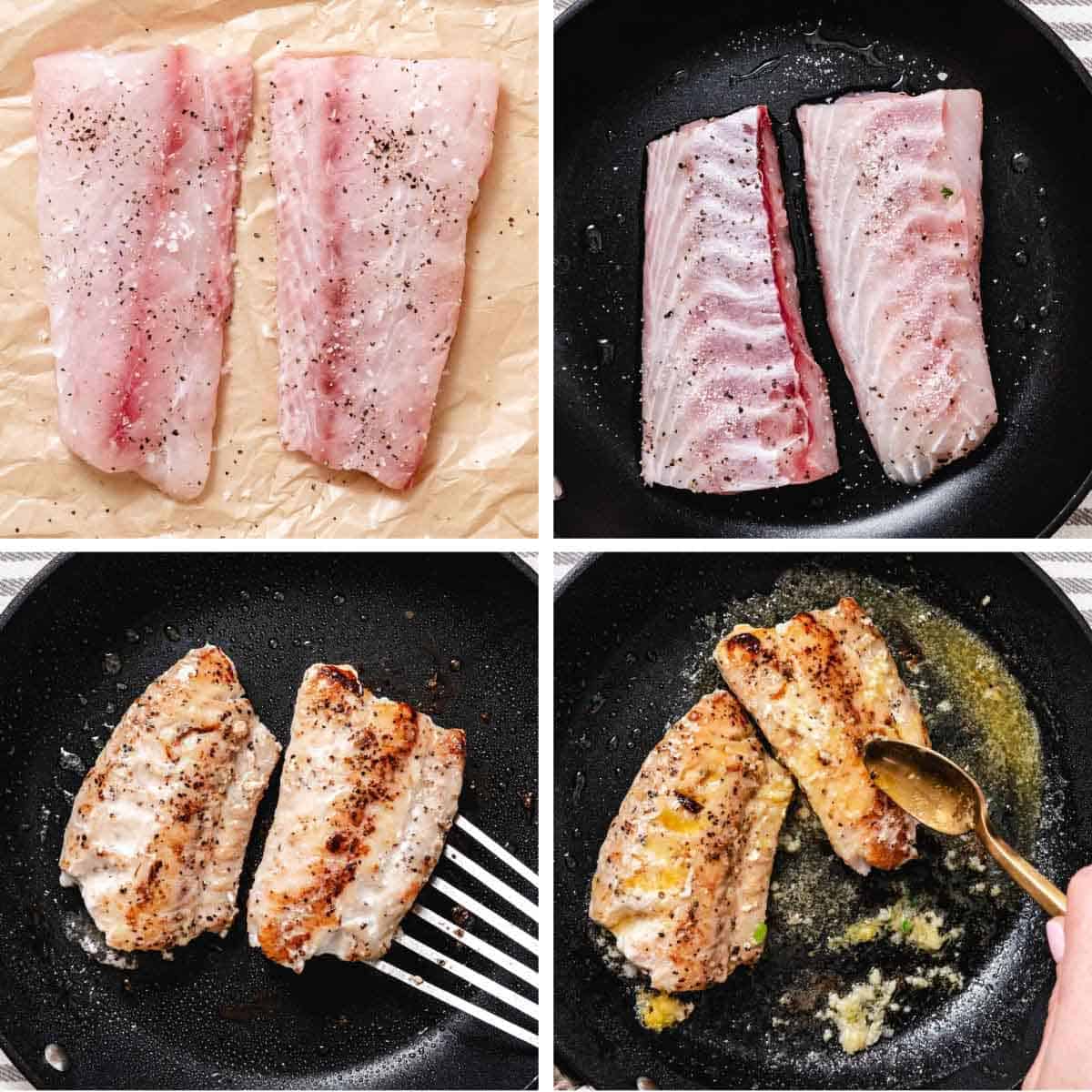
- Pat the tilefish dry with paper towels.
- Season both sides with salt and black pepper.
- Heat a heavy-bottomed or nonstick skillet over medium-high heat. Add 1 tablespoon olive oil and heat until shimmering.
- Place the tilefish in the pan and do not move it. Cook undisturbed for about 3 minutes, until it releases easily from the pan.
- Carefully flip the fish with a wide spatula. Add the butter, garlic, and lemon zest to the pan. Let the butter melt and spoon it over the fish as it finishes cooking.
- Cook another 2-3 minutes. The fish is done when it reaches 125-130°F and flakes easily with a fork.
- Sprinkle with sliced scallions and parsley. Serve immediately with fresh lemon wedges.
Should You Cook Tilefish With the Skin On?
Tilefish skin is edible, but most fillets are sold skinless.
If your fillet has skin, you can leave it on and sear it skin-side down first. The skin will crisp in the hot skillet and help hold the fish together.
If the skin looks thick or tough, you can remove it before cooking. Ask your fishmonger to do this for you if you're unsure.
Storage and Leftovers
Store leftover fish in an airtight container in the refrigerator for up to 2 days. Let the fish cool completely before sealing to prevent excess moisture from building up.
To reheat, warm gently in a skillet over low heat with a small pat of butter. Avoid the microwave if possible. It can dry the fish out quickly.
Serving
Tilefish is rich, so I like to serve it with simple sides.
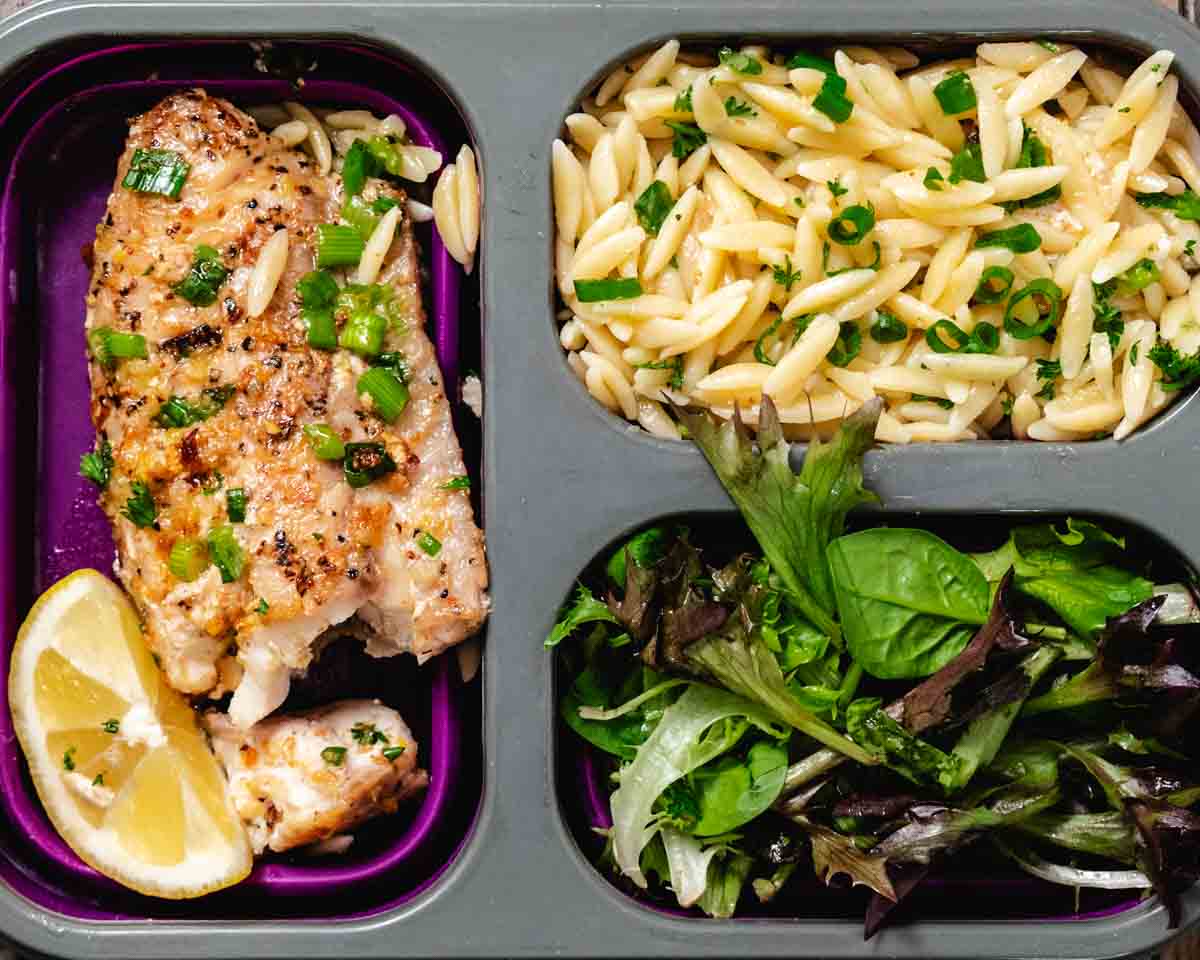
For this dinner, I made orzo and tossed it with a little olive oil, parsley, and lemon zest. I also had a bag of salad greens, which I dressed with olive oil, flaky salt, and a squeeze of lemon.
You can also try:
- Lemon Asparagus Rice
- Oven Roasted Baby Gold Potatoes
- Roasted Cauliflower with Breadcrumbs
- Steamed Broccoli and Carrots
If you're serving guests and want a little extra sauce, try our Lemon Garlic Butter Sauce on the side.
FAQ
Tilefish has a mild, slightly sweet flavor with a firm but delicate texture. It is richer than cod and milder than snapper. When fresh, it tastes clean and never fishy.
Tilefish is a good source of lean protein and contains important nutrients like vitamin B12 and selenium. It is low in carbohydrates and works well in high-protein meals. Like most fish, it can be part of a balanced diet when eaten in moderation.
Yes, tilefish skin is edible. If you cook it skin-side down in a hot skillet, it can become lightly crisp and help hold the fillet together. Many fillets are sold skinless, which is also perfectly fine.
Tilefish cooks quickly. In a hot skillet, most fillets take about 6 to 8 minutes total, depending on thickness. The fish is done when it flakes easily and reaches about 125-130°F internally.
Tilefish is wild-caught. It is harvested from deep waters along the East Coast and in the Gulf of Mexico. It is not farm-raised.
Pan-Seared Tilefish
Ingredients
- 2 (6-ounce) tilefish fillets, skinless and boneless
- sea salt
- black pepper
- 1 tablespoon olive oil
- 2 tablespoons unsalted butter
- 1 teaspoon lemon zest
- 1 clove garlic, finely minced
- 2 scallions, thinly sliced
- 2 tablespoons chopped parsley
- 1 lemon, sliced into wedges
Instructions
- Rinse the tilefish under cold running water and pat dry with paper towels.
- Season both sides with salt and black pepper.
- Heat a heavy-bottomed skillet over medium-high heat. Add 1 tablespoon olive oil and heat until shimmering.
- Place the tilefish in the pan. Do not move it. Cook undisturbed for about 3 minutes, depending on thickness.
- Carefully flip the fish with a wide spatula. Add the butter, garlic, and lemon zest to the pan. Let the butter melt and spoon it over the fish as it finishes cooking.
- Cook another 2-3 minutes, until the fish flakes easily with a fork.
- Sprinkle with sliced scallions and parsley. Serve immediately with fresh lemon wedges.


Leave a Reply
You must be logged in to post a comment.