

Today we're making Sautéed Bay Scallops. These sweet little scallops are a treat, and they need just a few minutes in the pan to become tender and flavorful. I sauté them in butter and serve them over spaghetti for a simple, delicious meal.
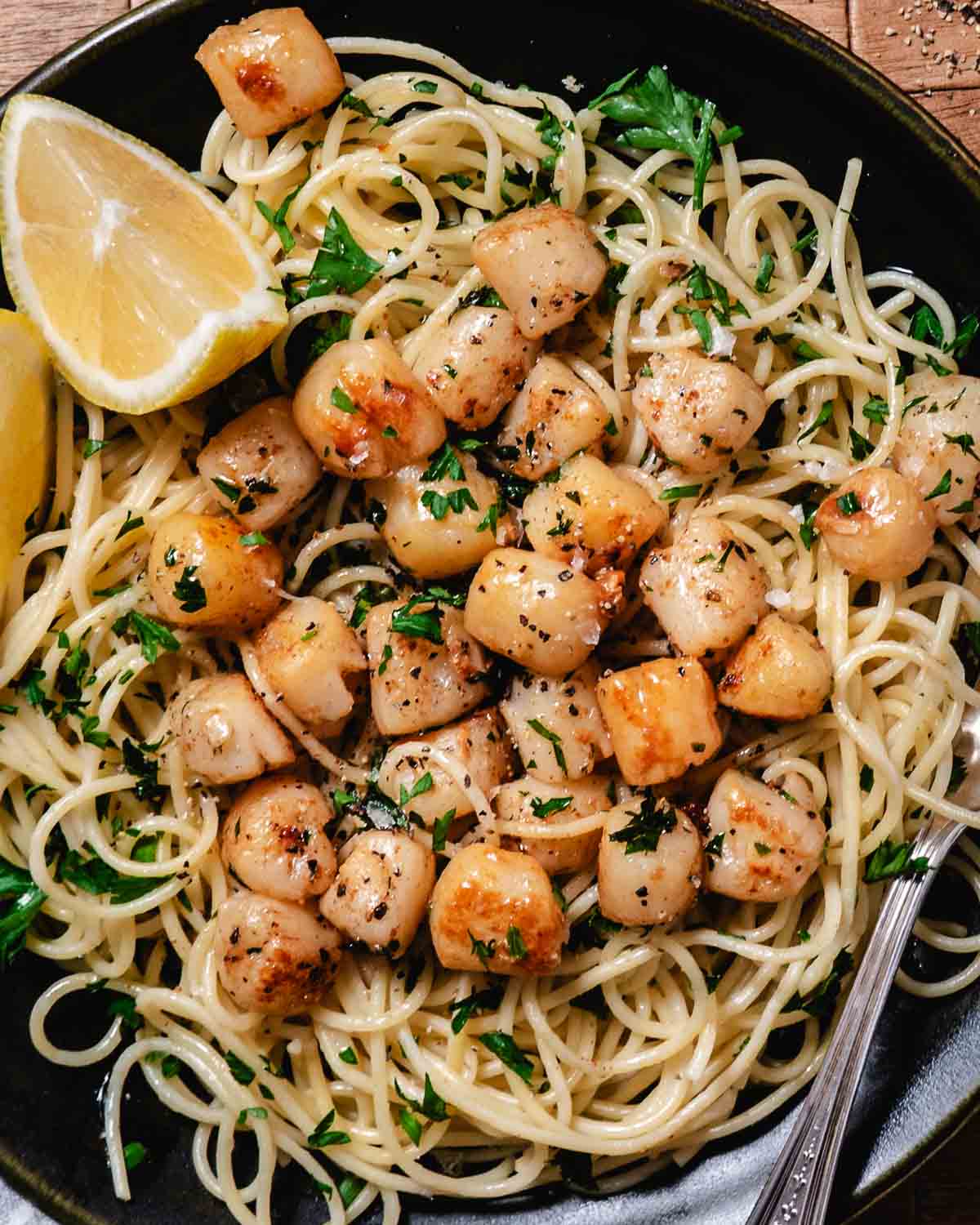
Nantucket Bay Scallops
Friends know I love fresh seafood, so every now and then something shows up at my door without warning. This time it was scallops.
A friend flew into Key Largo from Martha's Vineyard for the week and handed me a bag, saying, "These are fresh, you're going to love them."
Nantucket bay scallops are famous for their sweet taste. They are small and come from the cold waters near Nantucket. Harvested from November through March, they are hand-collected under strict rules to protect the fishery.
This small window keeps the species sustainable and lets the scallops grow, stay healthy, and return each season.
Down here in Key West, our stone crab claws, spiny lobsters, and grouper also have short harvesting windows. This practice protects the fishery, keeps the population strong, and gives us better seafood year after year.
How To Purchase Scallops
When you shop for scallops, look for ones labeled "dry" or "dry packed." This means they have no added water or preservatives. If you can't find dry scallops, buy what's available and pat them dry very well before cooking. Wet scallops release some liquid when they hit a hot pan.
The meat should look firm, smell clean, and have a natural cream color. Avoid scallops sitting in milky liquid or anything with a strong odor. They may be sold fresh or frozen.
For frozen scallops, look for loose pieces inside the bag. A solid block of ice means they thawed during transport.
Scallops that aren't dry-packed release more water in the pan and will not brown as well, which can cause extra shrinkage during cooking.
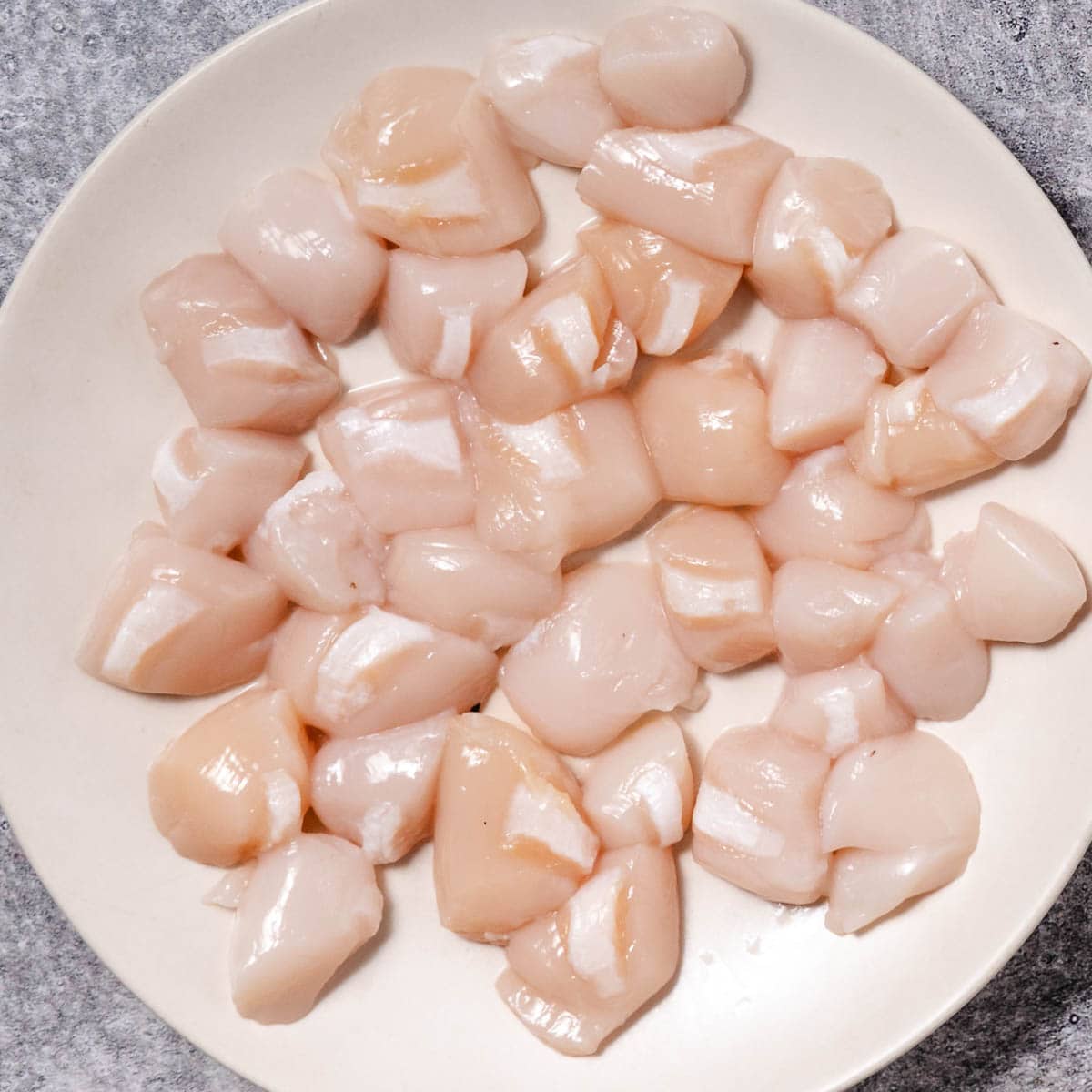
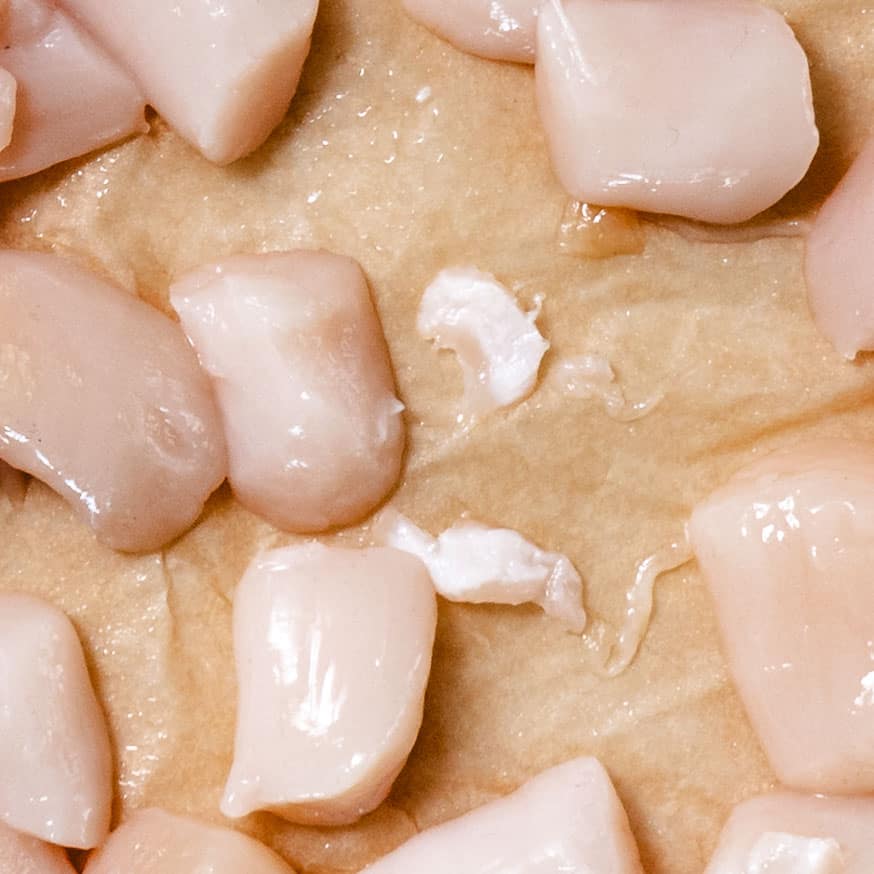
Removing the Muscle
Bay scallops and sea scallops have a small white muscle on the side. Hold the scallop and gently pull the muscle off with your fingers. Toss it out and your scallops are ready to cook.
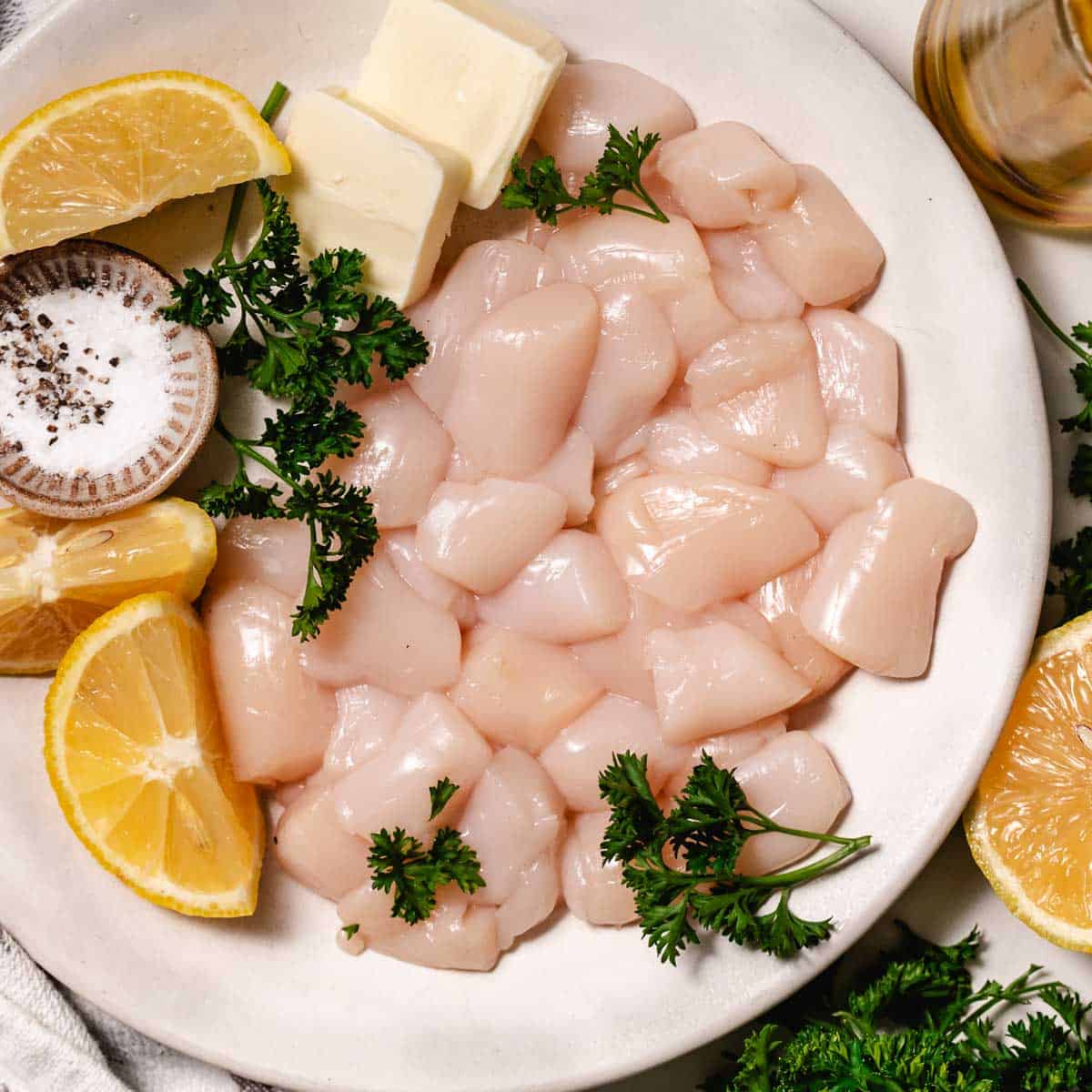
Ingredients
Makes 2 servings
- Bay scallops
- Olive oil
- Unsalted butter
- Fresh lemon juice
- Salt and black pepper
- Fresh parsley
- Lemon wedges
See the recipe card below for exact amounts.
How To Cook Small Scallops in Butter
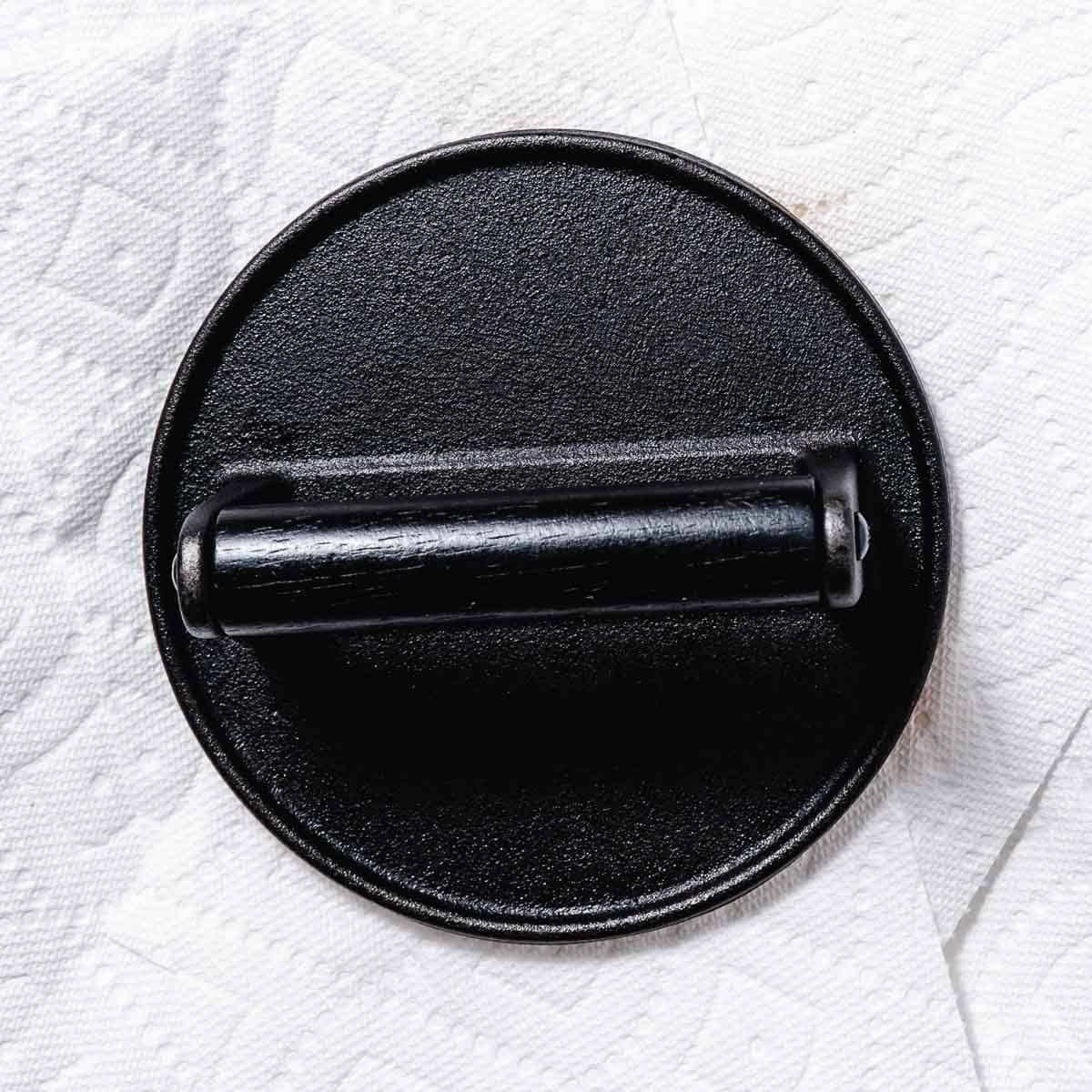
Step 1: Rinse the scallops and lay them in a single layer on triple-layered paper towels. Place a cast-iron press or heavy pot on top for 5 minutes to draw out moisture. Pat dry.
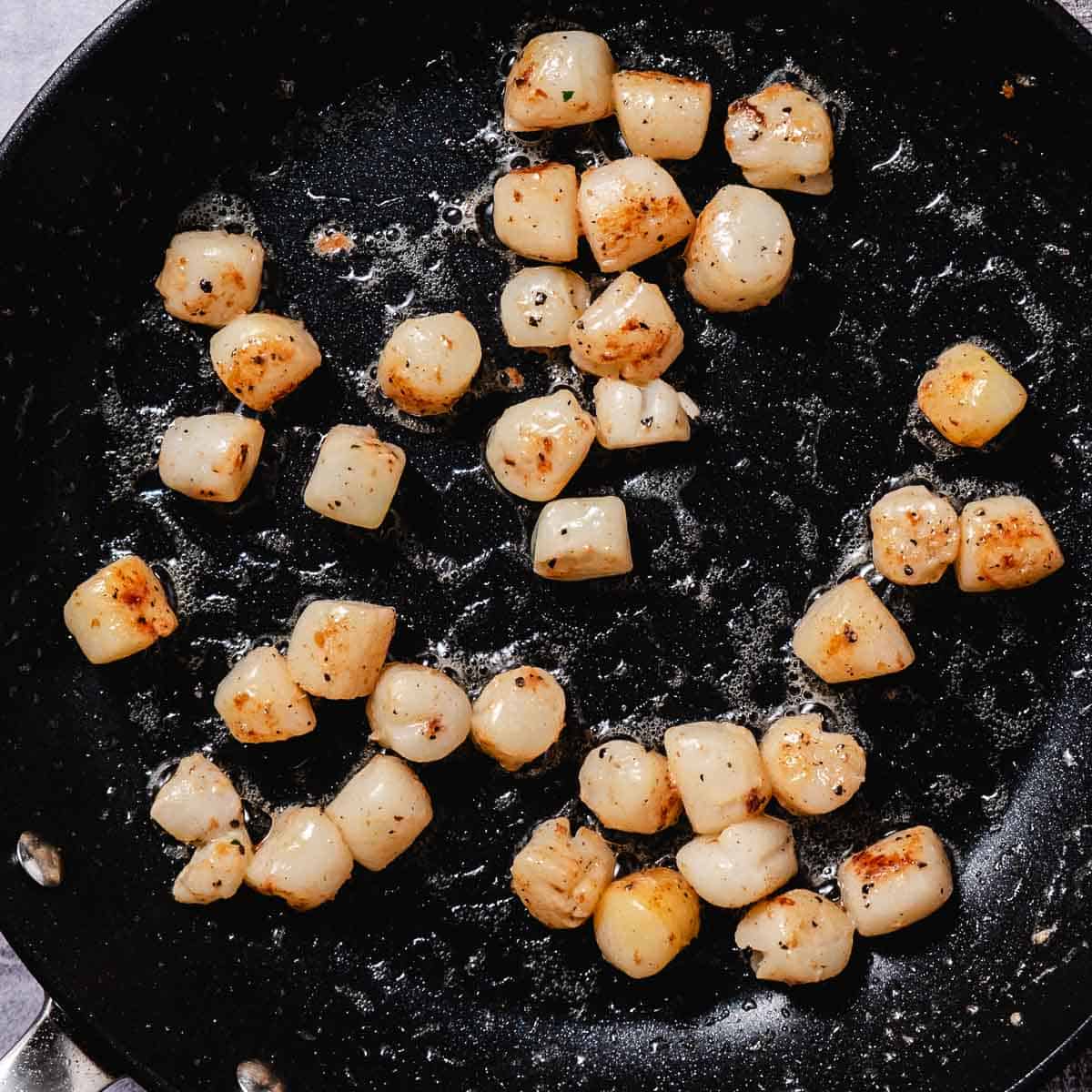
Step 2: Season all sides with salt and black pepper. Heat a large nonstick skillet over medium-high heat with a tablespoon of oil. When the pan is hot, add the scallops in a single layer without crowding. Cook for 30 seconds without moving them.
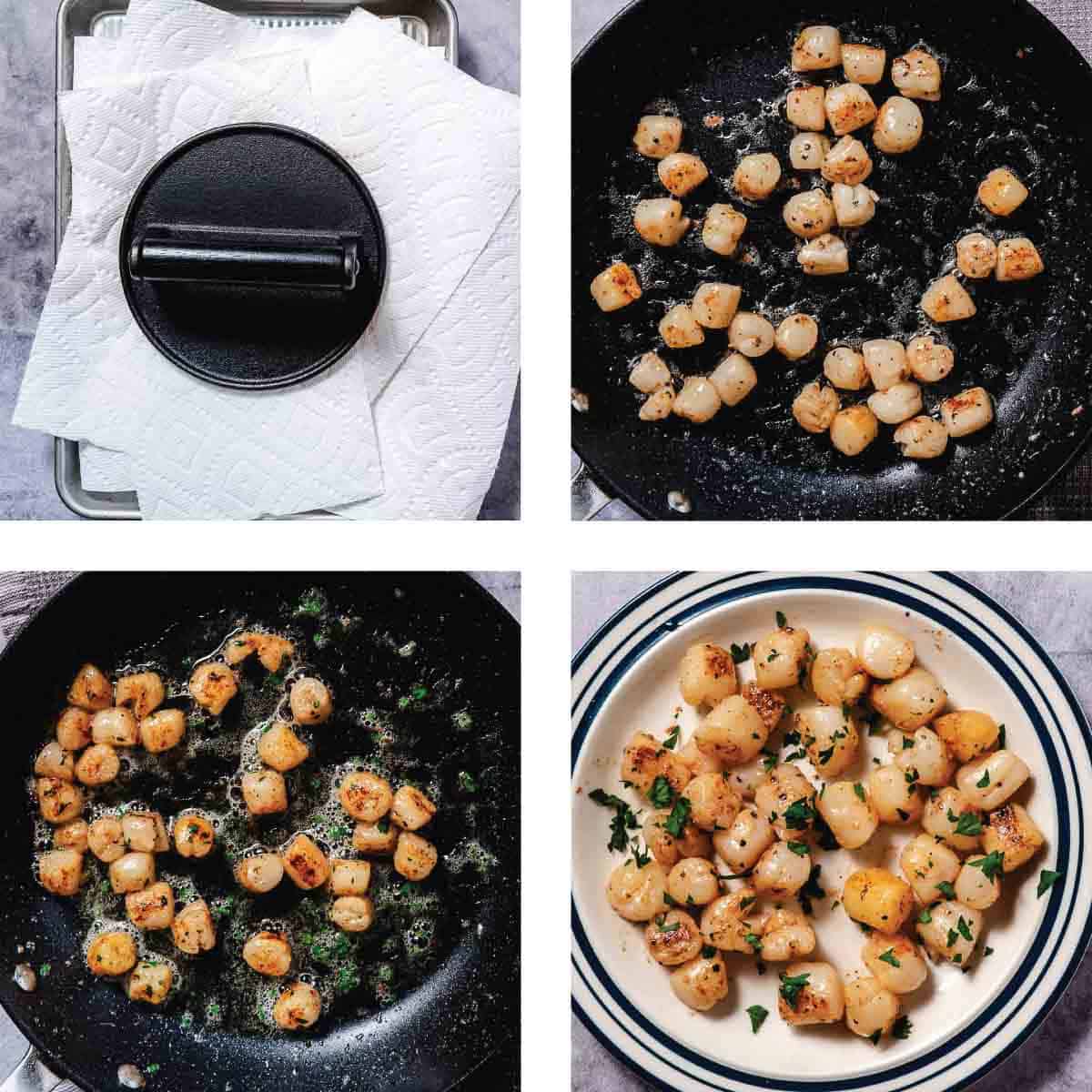
Step 3: Add the butter. Shake the pan as it melts. Squeeze fresh lemon over the top. Add parsley and toss for another 30-60 seconds, just until the scallops are opaque.
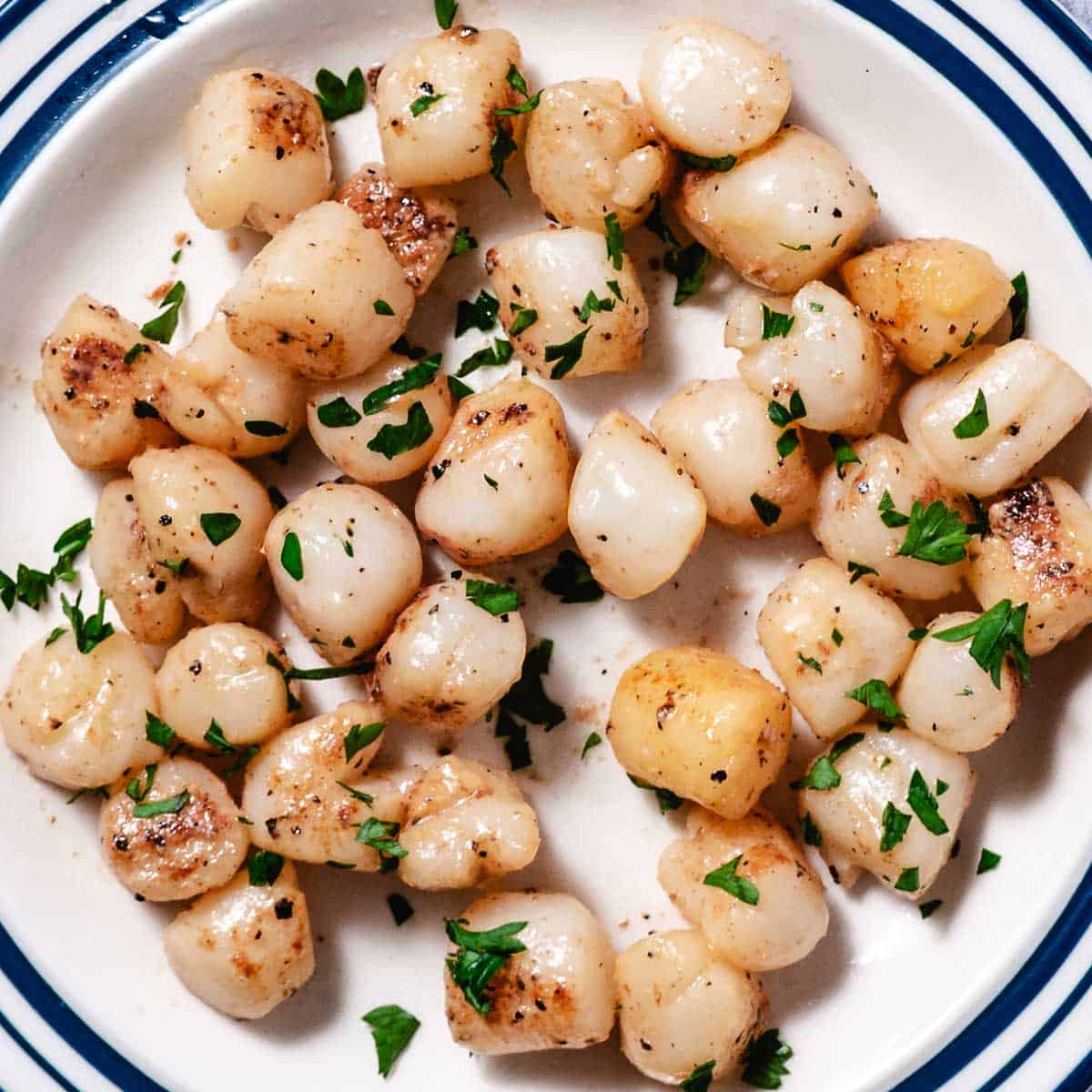
Step 4: Lift the scallops out with a spider or slotted spoon, and spoon the remaining butter over each serving. Serve with lemon wedges.
Serving Suggestions
Serve the scallops over white or brown rice, linguine, or thin spaghetti like angel hair or capellini.
If you're off carbs or starch, you can serve a salad on the side and a steamed vegetable.
Storage and Reheating
Bay scallops are best eaten right after cooking. If you have leftovers, place them in an airtight container and refrigerate for up to 2 days.
Reheat them gently in a skillet over low heat with a little butter or eat them cold. I'd avoid microwaving because it can make them tough.
Sautéed Bay Scallops
Small bay scallops taste sweet and cook in a few minutes, making them perfect for quick dinners or a simple snack.
To cook scallops, you need a drop of olive oil, a few tablespoons of butter, salt, pepper, and a little lemon juice.
Bay scallops cook in about two minutes and turn opaque as soon as they're done. If you overcook them, they get rubbery, so watch closely.
Nantucket bay scallops are a sustainable seafood from the ice-cold waters of the North Atlantic, harvested between November and March.
Dry the scallops very well before cooking so they brown. If they release a lot of water, let it cook off for an extra minute. It will dry up.
Serve with fluffy rice, toss with pasta, or enjoy with a garden salad and a cup of salmon fish chowder. They make an easy high-protein meal.
Sautéed Bay Scallops FAQ
Bay scallops are small, sweet scallops harvested from shallow bays. They cook very quickly and have a more delicate texture than sea scallops.
Bay scallops are best for quick cooking methods like sautéing. They're often used in pasta, seafood dishes, or served simply with butter.
Yes. They hold a lot of water, so they tighten and shrink as the water cooks off. This is normal, especially with non-dry pack scallops.
Bay scallops are sweet, succulent, and mild-tasting. They're tender and cook in a minute. The flavor is light, fresh, and not fishy.
The label should say "dry" or "dry packed." If it doesn't, assume they've been treated with added water and preservatives.
They cook fast. Most bay scallops are done in 1-2 minutes. Overcooking will make them tough.
Yes. Thaw them in the fridge and pat them very dry before cooking. Wet scallops will steam instead of sear.
Bay scallops are small, sweet, and cook in about a minute. Sea scallops are much larger, firmer, and take a little longer to sear. Bay scallops are great for quick meals or tossing with pasta, while sea scallops are usually served as larger single portions.
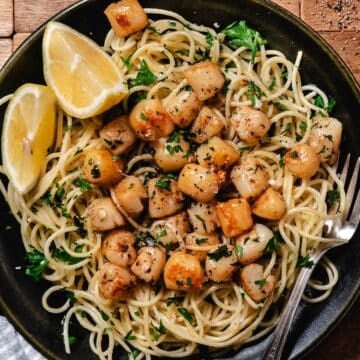
Sautéed Bay Scallops
Equipment
- 10" non-stick skillet
- Slotted spoon
Ingredients
- 1 pound bay scallops, side muscles removed
- 1 tablespoon olive oil
- 2 tablespoons unsalted butter
- juice of half a lemon
- sea salt and black pepper
- 1 tablespoon fresh parsley
- lemon wedges for serving
Instructions
- Rinse the scallops and lay them in a single layer on triple-layered paper towels. Set a cast-iron press or a heavy pot on top for 5 minutes to pull out the moisture. Pat dry.
- Season lightly with salt and black pepper on all sides.
- Heat a large nonstick skillet over medium-high heat with a tablespoon of oil. When the pan is hot, add the scallops in a single layer without crowding. Cook for 30 seconds without moving them.
- Add the butter. Shake the pan as it melts. Squeeze fresh lemon over the top. Add parsley and toss for another 30-60 seconds, just until the scallops are opaque.
- Lift the scallops out with a spider or slotted spoon and spoon whatever butter is left in the pan over each serving. Serve with lemon wedges.
Leave a Reply
You must be logged in to post a comment.