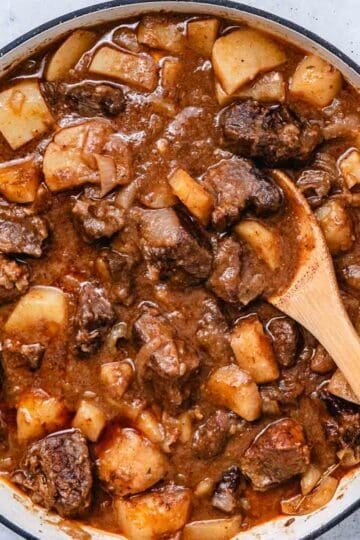

Using a slow cooker (Crockpot) for beef bone broth this is an easy way to make beef broth at home. The pot does the work while you go about your day. The result is a full-bodied broth you can sip on its own or use for soups, rice, and even French Onion Soup.
Jump to:
- Why I Love Bone Broth
- What Bone Broth Is (and What It Isn't)
- Choosing Bones
- What You Need
- How To Make Bone Broth in a Slow Cooker
- Stovetop Bone Broth (3-4 Hour Simmer)
- Why Bone Broth Gels
- How to Skim the Fat
- Storage and Reheating
- How to Use Homemade Bone Broth
- About Bone Broth
- FAQ
- More Collagen-Rich Recipes
- Slow Cooker Bone Broth Recipe
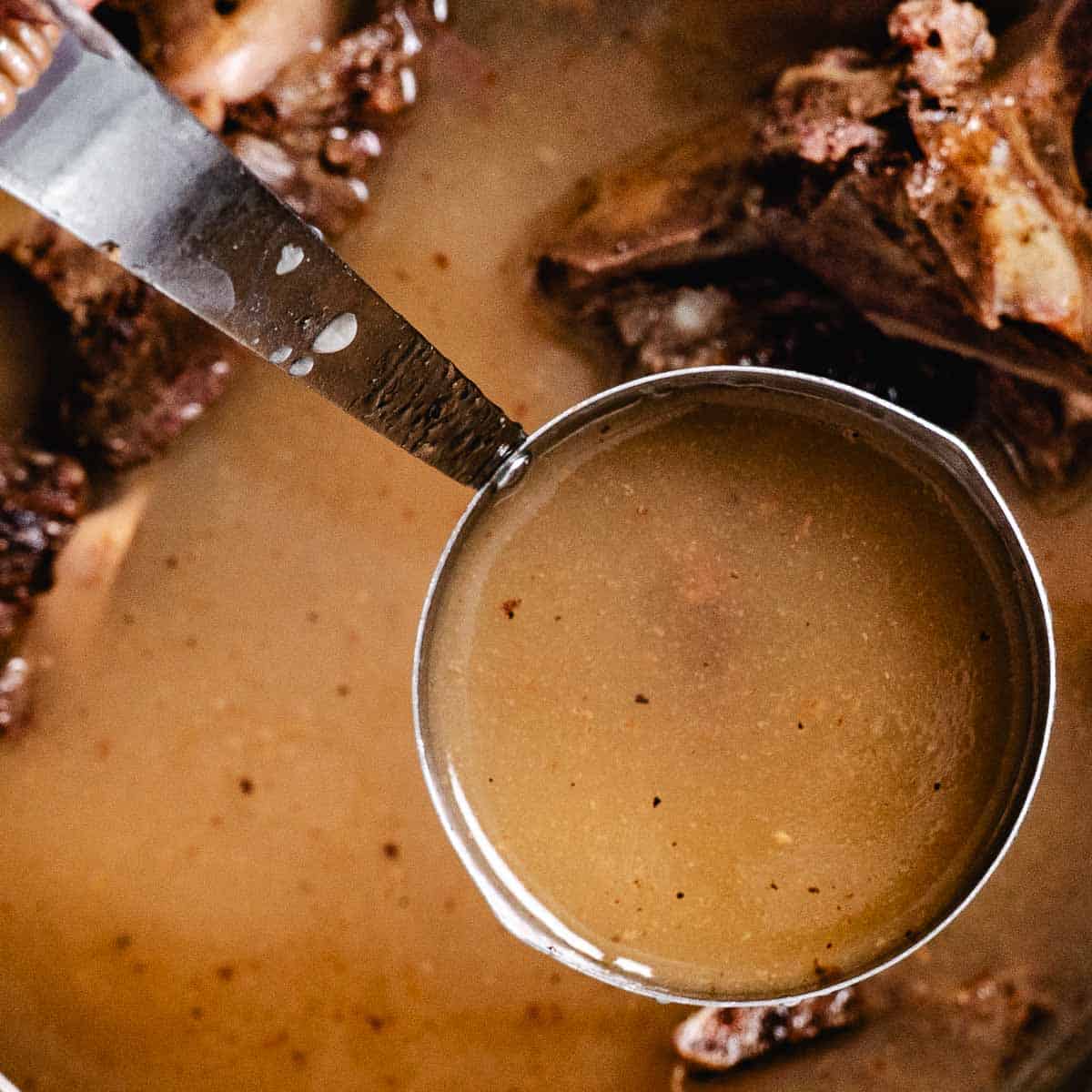
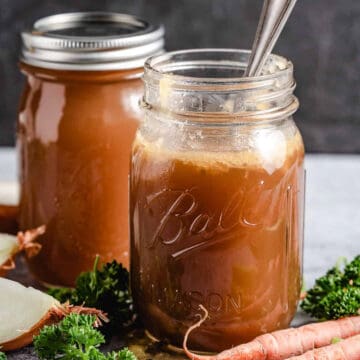
This slow cooker beef bone broth is made with beef bones, vegetables, and water, simmered low and slow until full-bodied. As it cools, the broth develops gelatin and can be used for soups, rice, or sipping. It stores well in the fridge or freezer and is easy to make ahead.
Why I Love Bone Broth
I started making bone broth about ten years ago when I was eating paleo. I'd head out to work in the morning and let the slow cooker run all day. By the time I got home, the kitchen smelled great and the broth was ready to strain and chill overnight.
Having a pot of broth in the fridge makes cooking the rest of the week easier. Soup comes together fast, and I always have something warm and homemade on hand.
I also like sipping broth during the day. Sometimes it replaces coffee or a snack. It's simple, filling, and gets me through the stretch between meals.
What Bone Broth Is (and What It Isn't)
Bone broth, stock, and regular broth often get lumped together, but they are not the same. The difference comes down to what goes into the pot and how long it cooks.
Stock is made mostly with bones and simmers for a shorter time. That gives it body and makes it useful for cooking. Broth cooks faster and is lighter, usually made with more meat than bones.
Bone broth cooks the longest. The long simmer pulls collagen and minerals from the bones. When it cools, it thickens.
Some cooks add tomato paste or whole tomatoes to stock for extra depth. Others keep it simple. There is no single right way to make it.
Sometimes I use bone broth instead of water when cooking rice or making soup, like my salmon chowder. It adds real flavor so I try to keep a few quarts in the freezer.
I also use it in French onion soup. After a few tries, I finally got my husband to eat bone broth by slipping it into a pot of onion soup. He loves it!
Choosing Bones
The best bone broth starts with good soup bones. Look for bones that have a mix of marrow, joints, and connective tissue.
Marrow bones, neck bones, knuckles, and oxtail all work well. Knuckles and joints add body, marrow bones add flavor, and oxtail gives you a bit of both.
Ask your butcher for soup bones rather than packaged bones when you can. They'll usually put together a good mix for broth.
If possible, choose pasture-raised beef but any good-quality bones will work.
What You Need
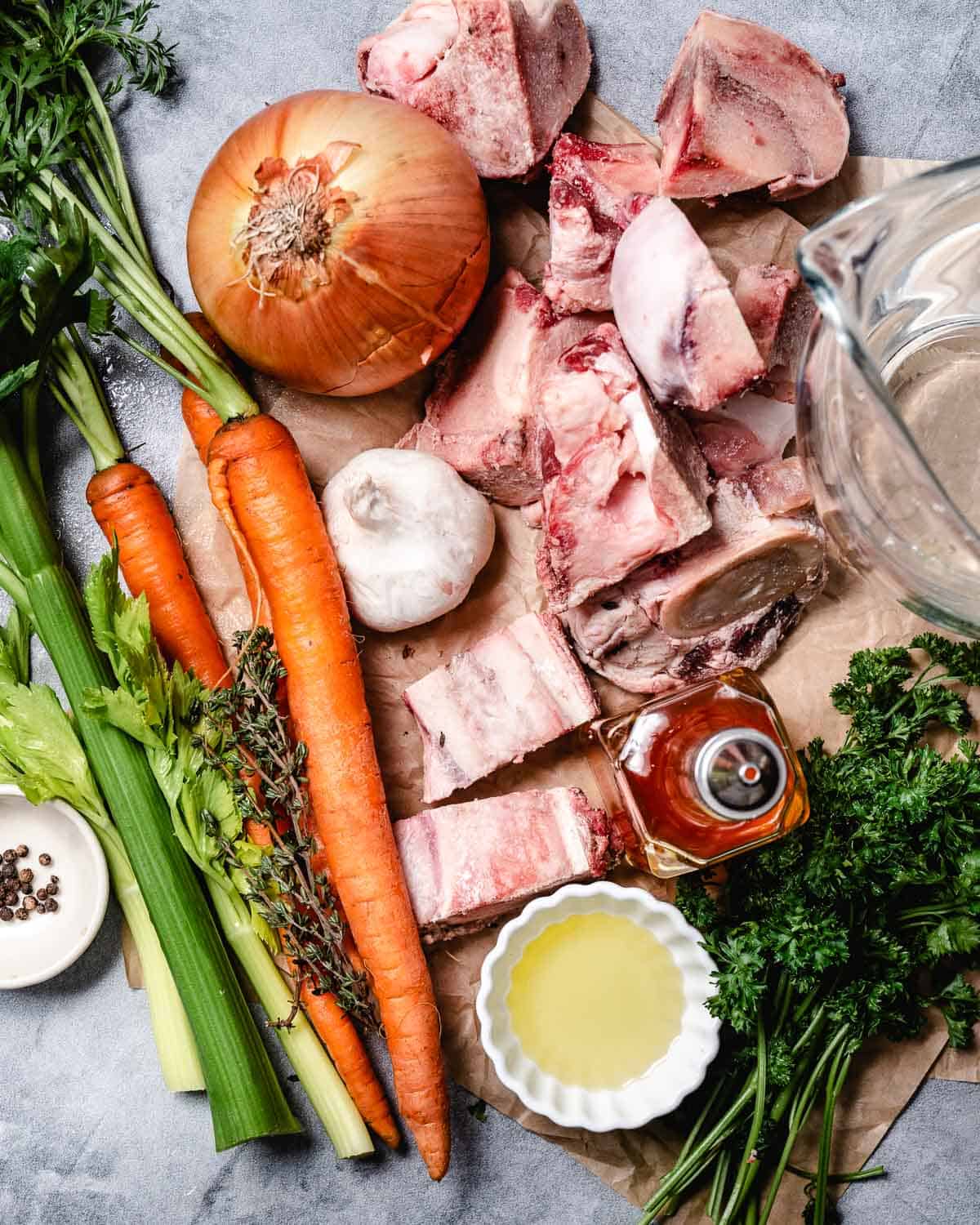
Ask your local butcher for marrow bones, knuckles, or oxtail. They usually have plenty of soup bones on hand.
- Beef bones (marrow bones, oxtail, knuckles), preferably from pasture-raised or grass-fed beef
- Olive oil
- Yellow onions
- Carrots, cut into large pieces
- Celery, roughly chopped or celery leaves
- Garlic cloves, peeled and smashed
- Parsley
- Fresh thyme
- Bay leaves
- Whole peppercorns or black pepper
- Apple cider vinegar
- Filtered or bottled water
- Kosher salt
How To Make Bone Broth in a Slow Cooker
Notes: Roasting the bones and sautéing the vegetables adds deeper flavor to the broth. If you're short on time, you can skip this step and place everything directly into the slow cooker.
Onions: Use one chopped yellow onion for sautéing with the celery and carrots.
Add a second onion, halved with the skin on, directly to the pot. The onion skin gives the soup a great orange color.
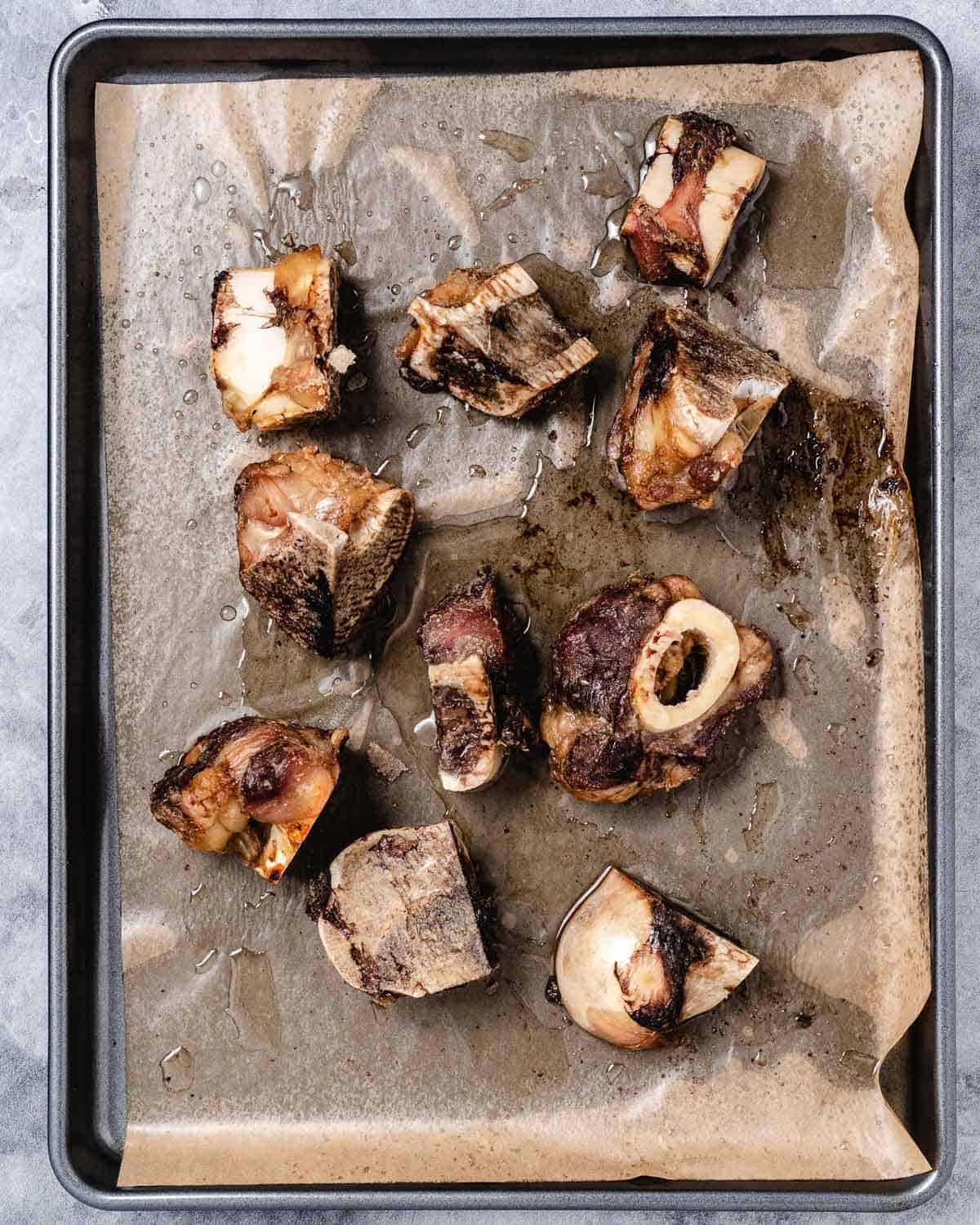
- Rinse the bones and pat them dry. Spread them out on a roasting pan or baking sheet and roast at 400°F for 45 minutes to 1 hour.
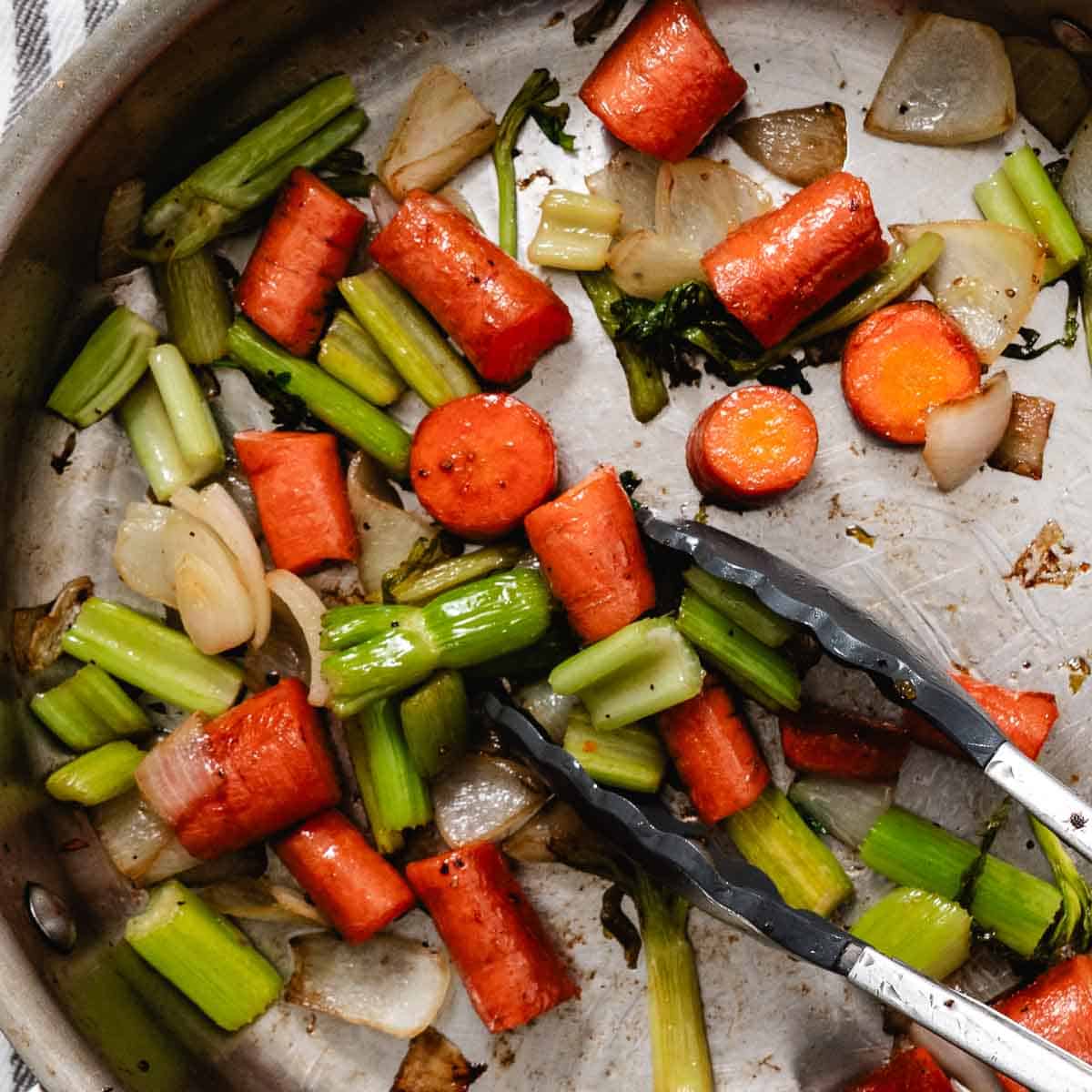
- While the bones roast, heat the olive oil in a large skillet. Add the carrots, celery, and chopped onions with a pinch of salt. Sauté over medium heat until the vegetables brown on the edges, about 15 minutes. Transfer vegetables to the slow cooker.
Add the bones, garlic, onion, bay leaves, peppercorns, parsley, thyme, and apple cider vinegar to the Crock Pot. Pour in enough water to cover the ingredients, leaving about two inches at the top so the pot doesn't overflow.
TIP: You can save bones from ribeye steaks or roasts. After the meal, store the bones in the freezer until you're ready to make broth.
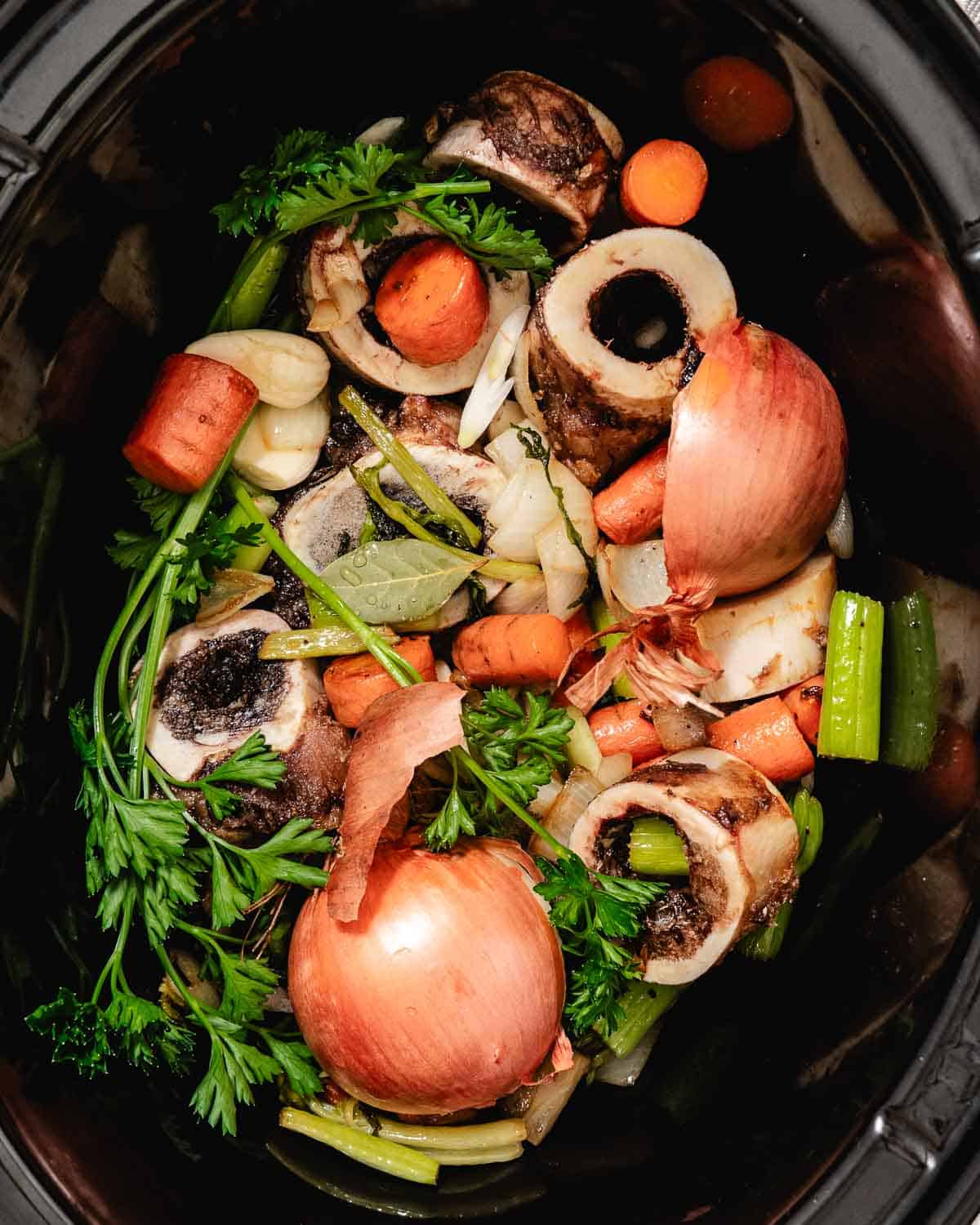
- Cover and cook on high for 1 hour.
- Skim off any foam, then reduce the heat to low and cook for another 11-17 hours.
- For the best flavor and body, aim for a total cooking time of 12-18 hours.
Tip: Keep the lid on while the broth cooks. Every time you open it, steam escapes, and it can take up to 30 minutes for the crock pot to regain its temperature.
Stovetop Bone Broth (3-4 Hour Simmer)
Bring the ingredients to a boil, skim off the foam, and reduce the heat to low. Partially cover and gently simmer for 3-4 hours.
This faster method produces a lighter broth with less gelatin than the slow-cooker version.
Why Bone Broth Gels
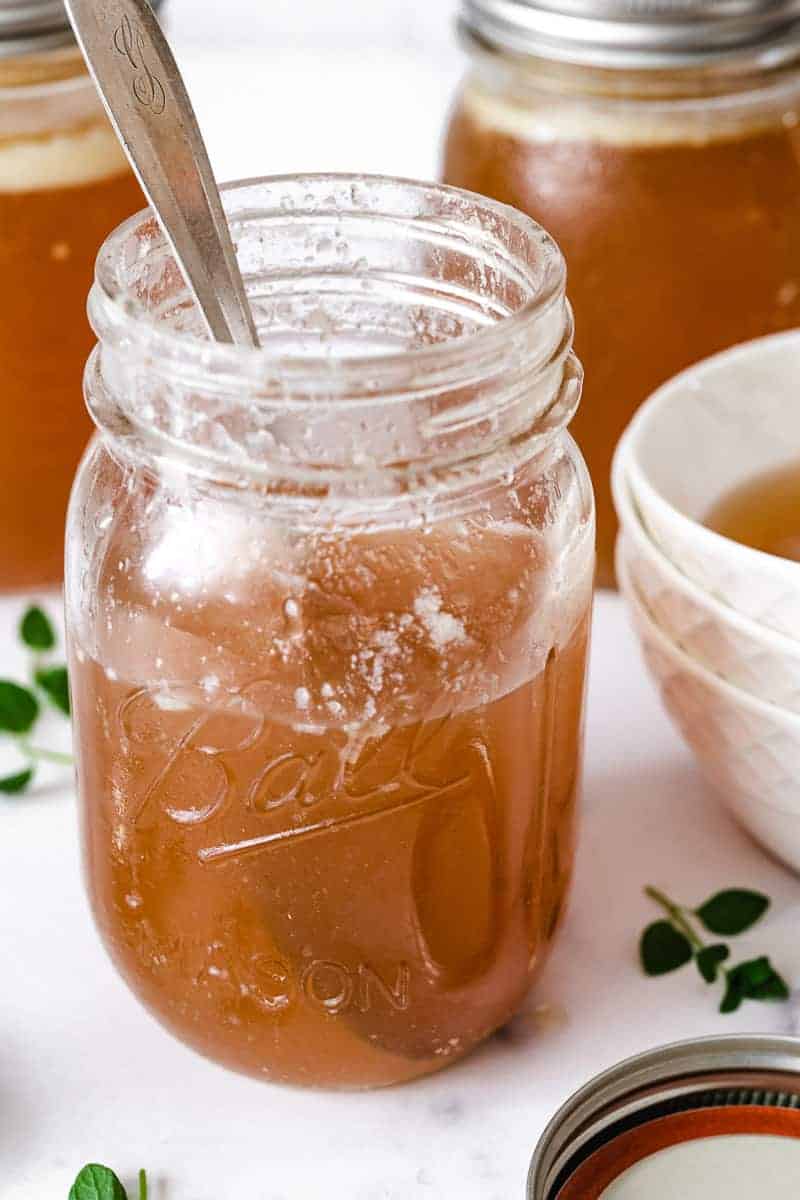
When bone broth cools, it may thicken or turn jiggly. This comes from gelatin released from the bones as they cook.
Gelatin firms up when the broth is cold and melts again when heated. This is normal and means the broth has good body. Not every batch gels the same way. When I cook broth overnight, the gel is thick once cooled. If I only cook it for about three hours, it firms up much less.

How to Skim the Fat
Once the broth is chilled, the fat rises to the top and hardens. You can lift it off easily with a spoon.
Storage and Reheating
After straining, divide the broth among shallow, heat-safe containers so it cools quickly. Refrigerate it within 2 hours of cooking.
Once chilled, the fat will rise and harden on the surface. Lift it off with a spoon before using the broth. Refrigerate the covered broth for up to 4 days.
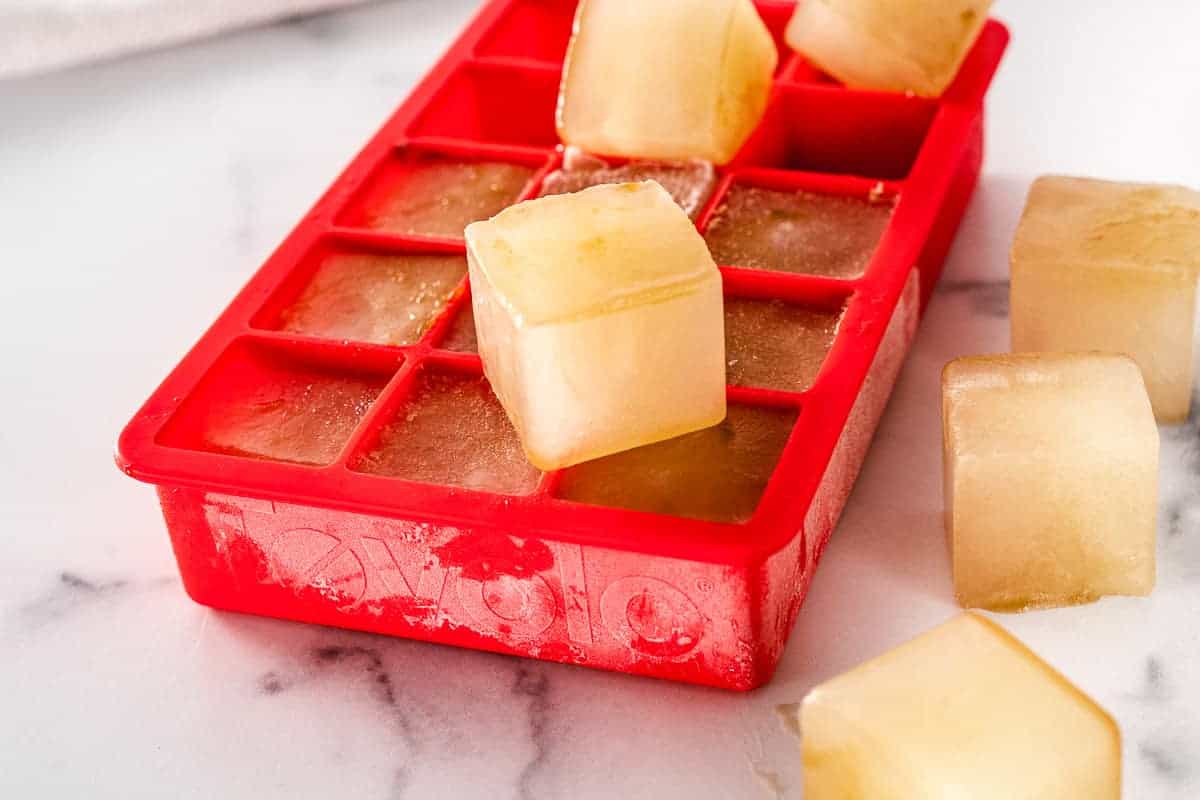
For longer storage, freeze the broth for up to 6 months. I like using 16-ounce freezer-safe containers for convenient portions. Leave room at the top because the broth will expand as it freezes. You can also freeze small portions in ice cube trays, then transfer the frozen cubes to a labeled freezer bag.
Thaw frozen broth overnight in the refrigerator or reheat it directly from frozen in a saucepan. Warm it over medium heat until it reaches a simmer and is heated throughout.
How to Use Homemade Bone Broth
Bone broth can be used anywhere you would normally use broth or water.
Sip it warm on its own, especially in the morning or between meals. It also works well as a base for soups and stews.
Use bone broth to cook rice, quinoa, or other grains for extra flavor. You can also use it when making sauces, gravies, or braising meats and vegetables.
Any recipe that calls for broth or stock can usually be made with bone broth instead.
About Bone Broth
Bone broth gets its body from connective tissue and cartilage, which slowly break down as the broth cooks. (Medical News Today)
Bone broth gets its body from connective tissue and cartilage, which slowly break down as the broth cooks. Collagen from the bones turns into gelatin, giving the broth its rich texture.
As the bones simmer, small amounts of minerals like calcium and magnesium leach into the liquid. The exact makeup depends on the type of bones used and how long the broth is cooked.
Bone broth also contains amino acids that come naturally from gelatin, including glutamine and glycine. These are part of what gives the broth it's familiar mouthfeel.
FAQ
Yes, I often add a piece of chuck steak or rib bones to the pot while the broth is cooking. You can let the meat cook for 3 hours or so in the broth and then pull it out and eat it.
If your broth doesn't gel in the fridge, it likely needs more collagen-rich bones like knuckles, joints, or feet. Longer simmering helps extract more gelatin too.
Bone broth has a small amount of protein, about 5 to 10 grams per cup, mostly from collagen and gelatin. It's not a high-protein food, but you can add a small piece of beef shank or chuck to the pot if you want more substance.
Yes. Crock-Pot is a brand name, but it refers to the same type of appliance as a slow cooker. You can use any large slow cooker or Crock Pot for this recipe, if it holds everything comfortably and can cook on low for several hours.
More Collagen-Rich Recipes
- Chicken Feet Soup and Bone Broth
- Old-Fashioned Chicken Soup
- Homemade Fish Stock
- Instant Pot Chicken Soup
- Green Pea Soup
- Instant Pot Chili
Check out Budget-Friendly Meat Recipes for easy, flavorful meals that won't break the bank!
Slow Cooker Bone Broth Recipe
Ingredients
- 3 pounds beef bones marrow bones, oxtail, knuckles, preferably from pasture-raised beef
- 1 tablespoon olive oil
- 2 medium onions, one peeled and roughly chopped and one unpeeled trimmed and halved
- 3 carrots, sliced into 2-inch pieces
- 2 ribs celery, roughly chopped or a handful of celery leaves
- 6 garlic cloves, peeled and smashed
- 2 parsley sprigs
- 3 fresh thyme sprigs
- 2 bay leaves
- 1 tablespoon peppercorns or a teaspoon of black pepper
- 2 tablespoons apple cider vinegar
- 1 gallon filtered or bottled water
- sea salt to taste
Instructions
- Preheat oven to 400 degrees F. Rinse the bones and place them on a roasting pan. Roast for 45 minutes to 1 hour, tossing after 30 minutes.
- While the bones roast, heat the olive oil in a large skillet. Add the carrots, celery, and chopped onions with a pinch of salt. Sauté over medium heat until the vegetables brown on the edges, about 15 minutes. Transfer vegetables to the slow cooker.
- Add the bones, garlic, onion, bay leaves, peppercorns, parsley, thyme, and apple cider vinegar to the Crock Pot. Pour in enough water to cover the ingredients, leaving about two inches at the top so the pot doesn't overflow.
- Set the slow cooker to high, cover, and cook for one hour. Skim off any foam that rises to the top.
- Reduce the heat to low, cover, and cook for another 11-17 hours, for a total cooking time of 12-18 hours.
- Strain the broth through a fine-mesh strainer. Divide it among shallow, heat-safe containers and refrigerate within 2 hours.
- Store the broth in covered containers or mason jars. Refrigerate overnight and skim off the fat before using or storing.